13 Top Webinar Platforms Ranked by Features, Pricing & Scale (2026)

Casey Zeman
Published on Jul 22, 2026 • 50 min read

TL;DR
- We ranked 13 top webinar platforms for 2026 by revenue mechanics, not brand familiarity, weighting format range, conversion, pricing transparency, setup, and verified reviews.
- EasyWebinar ranks first as the only all-in-one running live plus evergreen with AI funnel build, in-webinar payments, and native CRM in one stack.
- Hosting tools like Zoom, GoToWebinar, Webex, and Teams are reliable but lack funnels, checkout, and selling analytics.
- Split ecosystems like WebinarJam plus EverWebinar force two tools and two bills to cover live and automated formats.
- Sticker prices mislead because attendee tiers and feature gating inflate real cost, so compute total spend at your true volume.
- Choose by funnel maturity, not feature count, and test the full funnel because silent failures, not the tool, usually kill webinars.
Q1. What are the 13 best webinar platforms for features, pricing, and scale in 2026?
A webinar platform hosts live, automated, and on-demand presentations. It bundles registration pages, streaming, engagement tools (polls, Q&A), and analytics. The 13 best in 2026 are EasyWebinar, Zoom Webinars, GoToWebinar, Demio, Livestorm, WebinarJam, EverWebinar, WebinarNinja, BigMarker, Webex Webinars, Microsoft Teams Webinars, Contrast, and Zoho Webinar. EasyWebinar ranks first as the only all-in-one running live plus evergreen with AI build, in-webinar payments, CRM, and Dolby-grade streaming.
Here is the ranked shortlist covered in this guide:
- EasyWebinar
- Zoom Webinars
- GoToWebinar
- Demio
- Livestorm
- WebinarJam
- EverWebinar
- WebinarNinja
- BigMarker
- Webex Webinars
- Microsoft Teams Webinars
- Contrast
- Zoho Webinar
Picking a webinar platform is a high-stakes call. The tool sits in front of your pipeline, so a wrong pick quietly bleeds registrants, ad budget, and revenue for months. We evaluated 13 vendors against defined criteria. The daily operator is usually a coach, course creator, or marketing manager running the funnel. But the shadow buying committee matters too: the CFO validating stack consolidation, the IT or RevOps lead checking reliability and CRM flow, and the revenue leader judging pipeline impact.
Why This Decision Breaks So Often
Most people ask the wrong question first. They ask “which tool is best?” The sharper question is different. Your cost per lead and show rates are all over the place, and that randomness is the real enemy. I have watched this for years. The tool rarely fails you. Your model does. You focus on the wrong metric while the tech breaks silently underneath you.
Here is a scene I have lived more than once. It is Wednesday at 2pm. 380 people registered, and 95 show up. You are staring at the dashboard wondering where the money leaked. Was it the reminder emails? A dead mobile button on the registration page? A maxed-out integration? That is the operator reality no roundup talks about. So this guide ranks tools by revenue mechanics, not brand familiarity. If you want the mechanics behind that gap, our guide to webinar analytics breaks it down.
Our Evaluation Criteria
We scored each platform on decision-grade criteria specific to how operators actually pick a webinar tool. These are not generic feature checkboxes.
Webinar format coverage 🎥
Whether the tool supports live, simulated live (pre-recorded that plays on a schedule), automated, evergreen, just-in-time, and on-demand replay.
Time to launch ⏰
How fast you can build pages, create an event, set up automation, and use templates or AI-assisted funnel creation, such as our AI funnel builder.
Engagement depth 💬
Chat, polls, Q&A, timed offers, calls-to-action, and whether engagement survives into the replay.
Funnel and conversion workflow ✅
Registration pages, thank-you pages, replay pages, offers, checkout, and follow-up paths in one flow.
CRM and follow-up readiness 🔗
Native CRM, lead scoring, attendee tagging, segmented follow-up, and clean CRM/email integrations. See how a native sales CRM changes this.
Monetization support 💰
Paid or ticketed webinars, in-webinar offers, checkout, and payment integrations like Stripe or PayPal, the core of running paid webinars.
Analytics and attribution 📊
Registration, attendance, engagement, offer clicks, replay behavior, and end-to-end conversion visibility.
Reliability, support, and scale ⚙️
Streaming stability, attendee capacity, compliance (SOC 2, GDPR), support model, and enterprise readiness.
Who This Guide Is For
This guide is built for operators who use webinars to make money, plus the people who sign off on the purchase.
- Coaches and course creators turning educational webinars into repeatable sales funnels.
- Marketing teams using webinars for lead generation, nurturing, and pipeline acceleration.
- Revenue operators checking whether webinar data flows into CRM, scoring, and follow-up.
- Founders or consultants replacing disconnected tools for hosting, pages, email, checkout, and follow-up.
- Buying-committee readers: CFOs validating software consolidation, IT leaders checking reliability and security, and marketing heads judging funnel performance.
At-a-Glance Comparison
Pricing and capacity figures below reflect published 2026 data where available. Where a vendor does not list numbers publicly, we flag it to verify. For a broader view, see our full compare webinar platforms hub.
| Provider | Best For | Standout Strength | Known Limitation | Webinar Formats Covered | Support Model | Pricing Model |
|---|---|---|---|---|---|---|
| EasyWebinar ⭐⭐⭐⭐⭐ | Operators turning one webinar into a 24/7 revenue engine | Only tool combining live, evergreen, AI funnel build, in-webinar payments, and CRM in one platform | Not built for one-off internal meetings or sub-$200 offers | Live, simulated live, evergreen, just-in-time, on-demand, instant replay | Phone, email, and dedicated SPOC onboarding | Flat monthly (verify current tiers before publishing) |
| Zoom Webinars ⭐⭐⭐ | Teams wanting familiar, reliable large broadcasts | Ubiquitous, low-friction meeting-native hosting | “Not built for marketing or sales webinars”; no automation or funnels | Live, on-demand recording | Ticket-based; SPOC for enterprise | Add-on to Zoom plan, attendee-based ($79+/mo) |
| GoToWebinar ⭐⭐⭐ | Straightforward corporate broadcasts | Simple organizer backend and reliable reporting | Reviewers cite audio cut-offs and outsourced support | Live, simulive (GoTo Stage) | Email and ticket-based | Flat monthly, attendee-based ($49 to $499/mo) |
| Demio ⭐⭐⭐ | Marketing teams wanting a clean attendee experience | Polished browser-based UI and email prompts | Reviewers report audio issues and blocked data export after canceling | Live, automated, on-demand | Email and chat | Flat monthly, attendee-based (verify before publishing) |
| Livestorm ⭐⭐⭐ | Teams wanting no-download, browser-first events | Fully browser-based, no install for attendees | Higher tiers get costly; lighter automation depth (verify) | Live, automated, on-demand | Email and chat (verify) | Freemium, then flat monthly (verify before publishing) |
| WebinarJam ⭐⭐⭐ | Budget-conscious operators wanting live templates | Affordable live hosting with ready page templates | Split product; automation needs EverWebinar separately | Live | Email and ticket-based | Flat annual, attendee-based (verify before publishing) |
| EverWebinar ⭐⭐⭐ | WebinarJam users adding an automated arm | Simple just-in-time toggle for evergreen scheduling | Sold separately from WebinarJam; setup complexity noted | Automated, evergreen, just-in-time | Email and Facebook community | Flat annual (verify before publishing) |
| WebinarNinja ⭐⭐⭐ | Solo operators wanting a simple live/automated mix | Clean setup across live and automated formats | Fewer deep funnel and CRM features (verify) | Live, automated, series, on-demand | Email and chat (verify) | Flat monthly, attendee-based (verify before publishing) |
| BigMarker ⭐⭐⭐⭐ | Teams running large branded virtual events | Highly customizable large-event and summit hosting | Enterprise-oriented; pricing not public | Live, automated, evergreen, on-demand | SPOC and partner-delivered (verify) | Quote-based (not publicly listed) |
| Webex Webinars ⭐⭐⭐ | Enterprises inside a Cisco security stack | Enterprise-grade security and scale | Reviewers cite streaming limitations and lag | Live, on-demand | Enterprise SPOC and ticket | Quote-based and tiered (verify before publishing) |
| Microsoft Teams Webinars ⭐⭐⭐ | Organizations standardized on Microsoft 365 | Built-in registration inside the M365 stack | Reviewers note “basic” reporting and limited branding | Live, on-demand | Microsoft enterprise support | Bundled with M365 license (verify before publishing) |
| Contrast ⭐⭐⭐ | Teams repurposing webinars into content | Fast AI snippet, subtitle, and transcript cutting | Recording is final; no post-event editing | Live, on-demand | Email and fast SPOC | Flat monthly, quote-based (verify before publishing) |
| Zoho Webinar ⭐⭐⭐ | Existing Zoho-ecosystem users | Tight fit with the wider Zoho suite | Lighter conversion and evergreen depth (verify) | Live, on-demand | Email and ticket (verify) | Attendee-based, part of Zoho (verify before publishing) |
Every rating above ties back to the criteria, not to preference. EasyWebinar earns five stars because it is the only entry that scores strong across format range, monetization, CRM, and analytics at once. The rest specialize in a single slice of the workflow, which is exactly the trade-off a serious buyer needs to see.
1. EasyWebinar
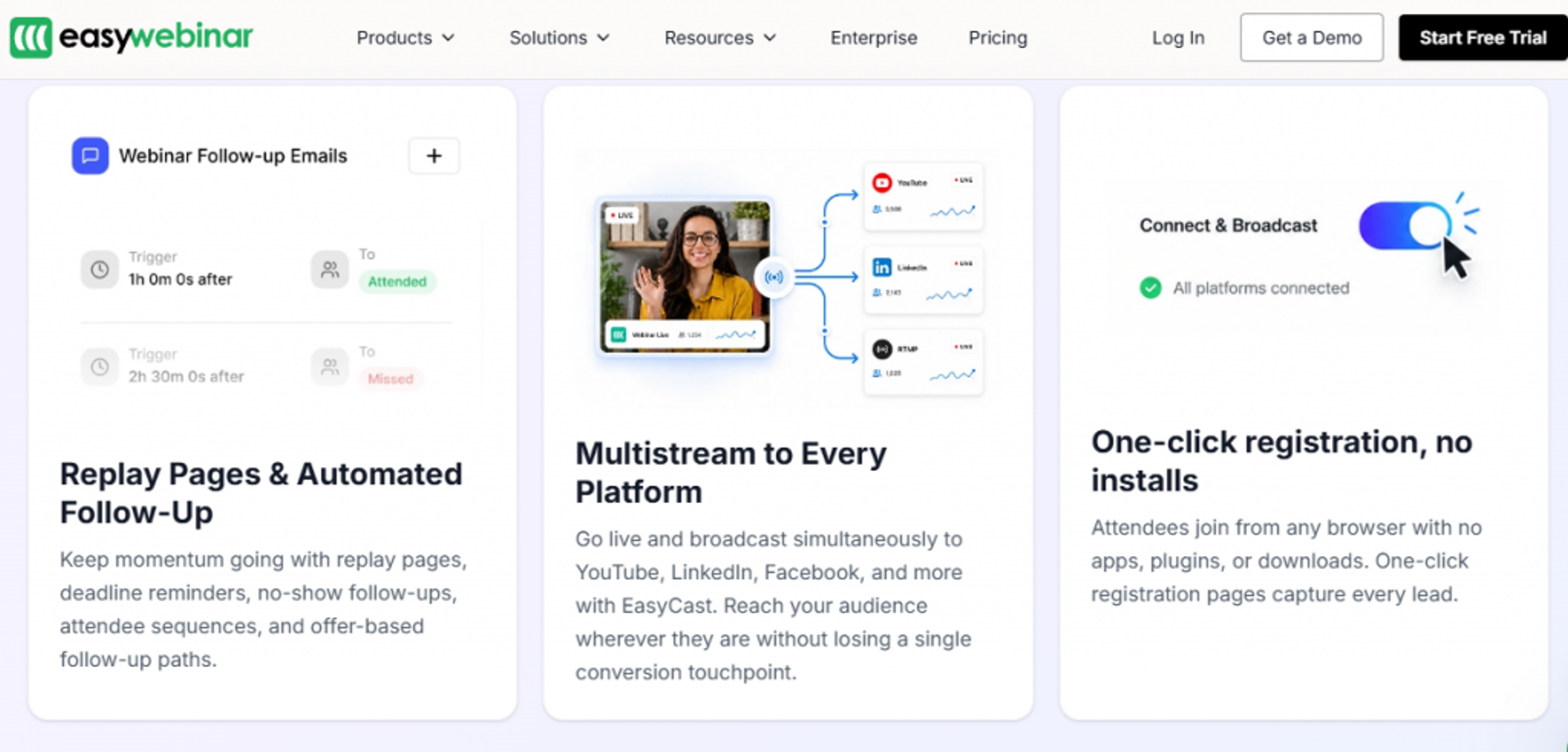
EasyWebinar is best for coaches, course creators, and marketing teams that need one webinar to generate leads and sell offers on repeat, because it combines live, evergreen, AI funnel build, in-webinar payments, and CRM in one platform, but it may not fit users running one-off internal meetings or selling products under $200.
I should be upfront here. I founded EasyWebinar, so read this section knowing that. I have tried to score it on the same criteria as everyone else, and I name where it does not fit.
Quick Fit
| Attribute | Detail |
|---|---|
| Best for | Operators selling offers above $200 who want webinars as a revenue engine |
| Skip if | You only run internal team meetings or one-off live events with no funnel intent |
| Strongest edge | Runs live and evergreen plus payments, CRM, and AI funnel build in one system |
| Biggest trade-off | Overbuilt for casual, non-selling use; premium tiers gate advanced automation |
| Pricing snapshot | Flat monthly; verify current tiers before publishing |
Why EasyWebinar Ranks #1
EasyWebinar ranks first because it is the only platform in this guide that closes the full webinar workflow without a second tool. Most platforms host the event and hand the rest back to you. You still buy pages, email, a CRM, and a checkout somewhere else. That gap is where cost per lead quietly climbs.
Here is the honest reframe. There are other good tools. WebinarJam, EverWebinar, and Demio all do parts of this well. But EasyWebinar takes a holistic approach and runs both live webinar software and automated webinar formats, plus several others, in one place. When the buyer wants webinars to sell, automate follow-up, and cut disconnected tools, this architecture wins on the criteria.
We think of it as five connected engines: a Conversion Engine (pages, offers, checkout), an Automation Engine (evergreen, just-in-time, simulive), an AI Engine (funnel build), an Experience Engine (streaming, chat, polls), and a Data Engine (attendee analytics into CRM).
What EasyWebinar Does Well
- Runs every webinar format, so you nail a live session first, then clone it into evergreen without rebuilding the funnel.
- Builds the funnel with AI, generating pages, emails, and offers in minutes with the AI webinar builder, which cuts time-to-launch from weeks to hours.
- Takes payments inside the webinar, so an evergreen session can close a sale unattended and keep the data unified.
- Feeds a native CRM (EasyCRM) with attendee behavior and lead scoring, so warm buyers route to follow-up automatically.
- Consolidates the stack, replacing separate page, email, storage, and checkout tools that otherwise cost $600 to $1,000 a month.
Where EasyWebinar Falls Short
- It is overbuilt for casual use. If you host one internal all-hands, a meeting tool is cheaper and simpler.
- Advanced automation sits on premium tiers. One reviewer notes just-in-time costs “about double the basic subscription”.
- The math needs a real offer. Below a $200 price point, a full webinar funnel is often not required.
Decision Scorecard
| Evaluation criterion | EasyWebinar fit | Why it matters |
|---|---|---|
| Live webinars | Strong | Broadcast-grade live with low-latency streaming |
| Simulated live / automated | Strong | Clones a winning live session into automated formats |
| Evergreen automation | Strong | Just-in-time and on-demand scheduling built in |
| Funnel pages | Strong | Registration, thank-you, and replay pages included |
| Engagement | Strong | Live chat, polls, timed offers, and CTAs |
| CRM and follow-up | Strong | Native EasyCRM with lead scoring and tagging |
| Monetization | Strong | In-webinar checkout via Stripe, PayPal, and PayU |
| Analytics | Strong | Attendee-level watch time, offer clicks, and drop-off |
| Integrations | Partial | Broad native list; verify Salesforce core and SSO/SAML |
| Pricing fit | Partial | Strong value at scale, but premium features gate up |
| Best-fit buyer | Strong | Built for webinar-led revenue, not casual hosting |
Reviews
One course creator reported switching from live to an evergreen EasyWebinar funnel and jumping from 10 to 12 course sales per live class to 25 sales in three weeks.
“With my live class I used to sell 10-12 courses. With EasyWebinar I sold 25 courses within 3 weeks of my evergreen launch.”
Laura C. EasyWebinar G2 Verified Review
A repeat operator praised setup speed and cloning but was honest about occasional bugs, which is a fair trade-off to weigh.
“Once I have run one webinar, I can clone and setup multiple in a breeze. My only dislike is there can be some bugs at times.”
Darrin B. EasyWebinar G2 Verified Review
Best For / Skip If
Choose EasyWebinar if you sell an offer above $200 and want live, evergreen, payments, and follow-up in one system instead of five. Skip it if your only need is internal meetings or a single live event with no funnel behind it. This is a revenue platform, not a meeting room. If you are weighing it head-to-head, our EasyWebinar vs Zoom breakdown lays out the differences.
2. Zoom Webinars
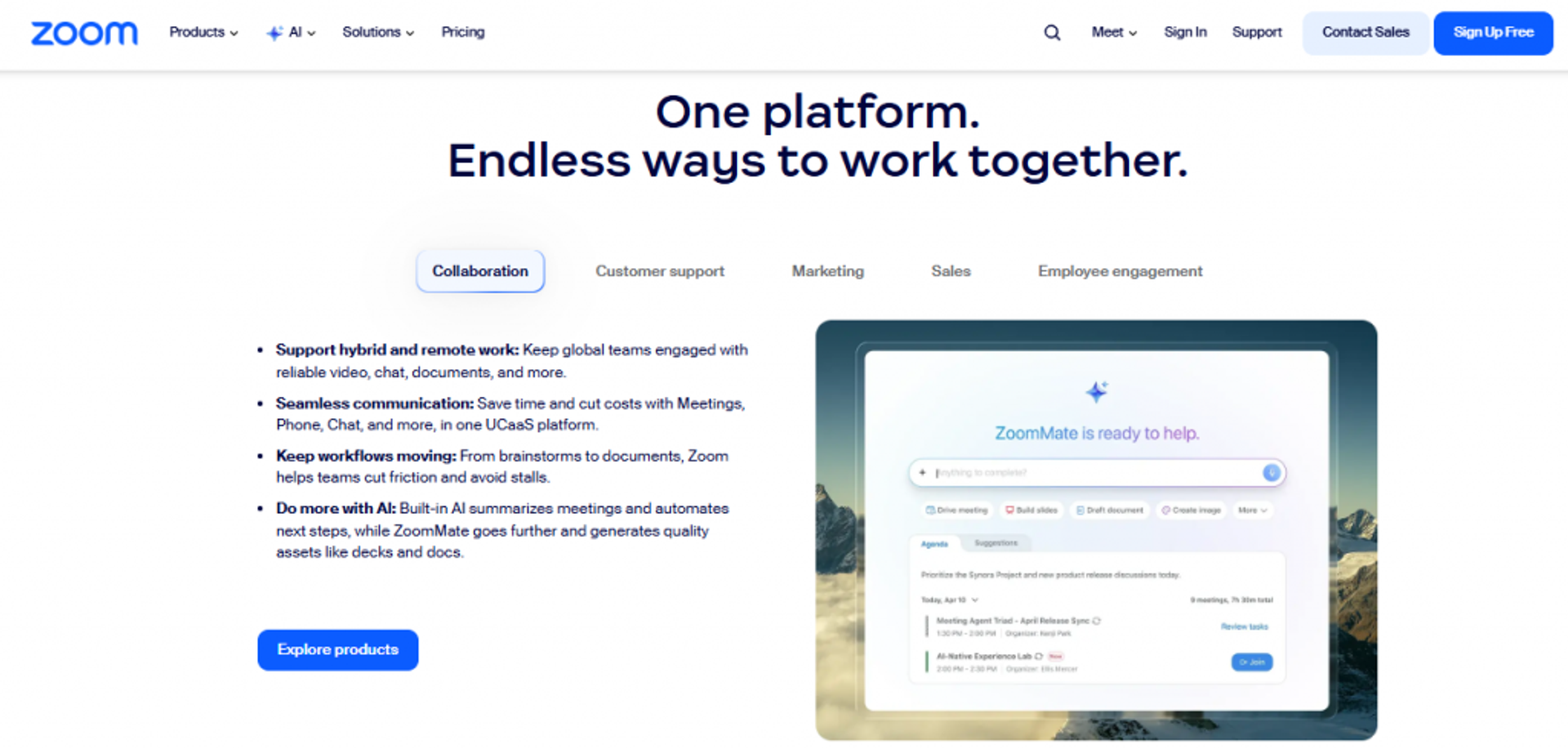
Zoom Webinars is best for teams and enterprises that need familiar, reliable hosting for large live broadcasts, because nearly everyone already knows the interface and it scales to big audiences, but it may not fit marketers who need automation, funnels, or in-session selling.
Quick Fit
| Attribute | Detail |
|---|---|
| Best for | Corporate teams running large, one-directional live broadcasts |
| Skip if | You need evergreen automation, funnel pages, or in-webinar selling |
| Strongest edge | Familiar interface and dependable large-scale streaming |
| Biggest trade-off | No automation, funnels, CRM, or built-in monetization |
| Pricing snapshot | Add-on to a Zoom plan; from $79/month, attendee-based |
Why Zoom Webinars Ranks #2
Zoom ranks high on familiarity and reliability, not on revenue mechanics. Its biggest asset is that your attendees already have it installed, so friction at the door is low. For a town hall or a large product update, that matters.
But on the conversion criteria, it is thin. An independent 2026 review is blunt about it. “Zoom Webinars is reliable for corporate presentations and large-scale events, but it’s not built for marketing or sales webinars.” At $79 a month on top of your base Zoom plan, you get hosting without automated webinars, funnels, AI tools, or sales features. You then bolt on email and landing page tools, which pushes real cost to $92 to $170-plus a month. Teams frustrated by that often review the Zoom alternative webinar platform options.
What Zoom Webinars Does Well
- Low attendee friction, because the interface is universal, which lifts show-up rates for corporate audiences.
- Reliable large-scale streaming, so enterprise plans reach 10,000-plus attendees for big broadcasts.
- Solid core engagement, including polls, live Q&A, and recording for on-demand viewing.
- Broad integrations, connecting to most marketing automation and CRM tools for data hand-off.
Where Zoom Webinars Falls Short
- No automation or evergreen. You cannot turn a winning session into a 24/7 funnel inside Zoom.
- Minimal customization and funnels. Reviewers say it “almost completely lacks customization” for branding.
- Reporting is thin. One reviewer flagged “no real webinar analytics” for conversion decisions.
- Reliability wobbles under load. A marketing reviewer called it “ridiculously glitchy” with presenter entry issues.
Decision Scorecard
| Evaluation criterion | Zoom Webinars fit | Why it matters |
|---|---|---|
| Live webinars | Strong | Dependable for large live broadcasts |
| Simulated live / automated | Weak | No native automated or simulive formats |
| Evergreen automation | Weak | No evergreen scheduling inside the tool |
| Funnel pages | Weak | Registration only; no thank-you or replay funnels |
| Engagement | Partial | Polls and Q&A exist; customization is limited |
| CRM and follow-up | Weak | No native CRM; relies on integrations |
| Monetization | Partial | Monetization only on higher Plus tiers |
| Analytics | Weak | Basic attendance data, thin conversion insight |
| Integrations | Strong | Connects to most CRM and marketing tools |
| Pricing fit | Partial | Cheap base, but total stack cost climbs |
| Best-fit buyer | Partial | Fits corporate broadcasts, not sales funnels |
Reviews
A marketing reviewer running 200 to 500 attendee events described repeated reliability and feature gaps.
“Zoom Webinar is ridiculously glitchy. Zoom is missing a lot of core webinar features that should be table stakes today.”
Casey S. Zoom Webinars G2 Verified Review
Another reviewer valued the stability and familiarity for standard events.
“Zoom has been everything we’ve wanted for running webinars for our national membership association. It was easy to implement.”
Rob K. Zoom Webinars G2 Verified Review
Best For / Skip If
Choose Zoom Webinars if you run large corporate broadcasts and value a familiar, reliable room your audience already trusts. Skip it if you need webinars to sell, because you will end up paying for email, pages, and a CRM on top and still lack automation. Marketers making that jump often start with a best webinar software comparison before committing.
3. GoToWebinar
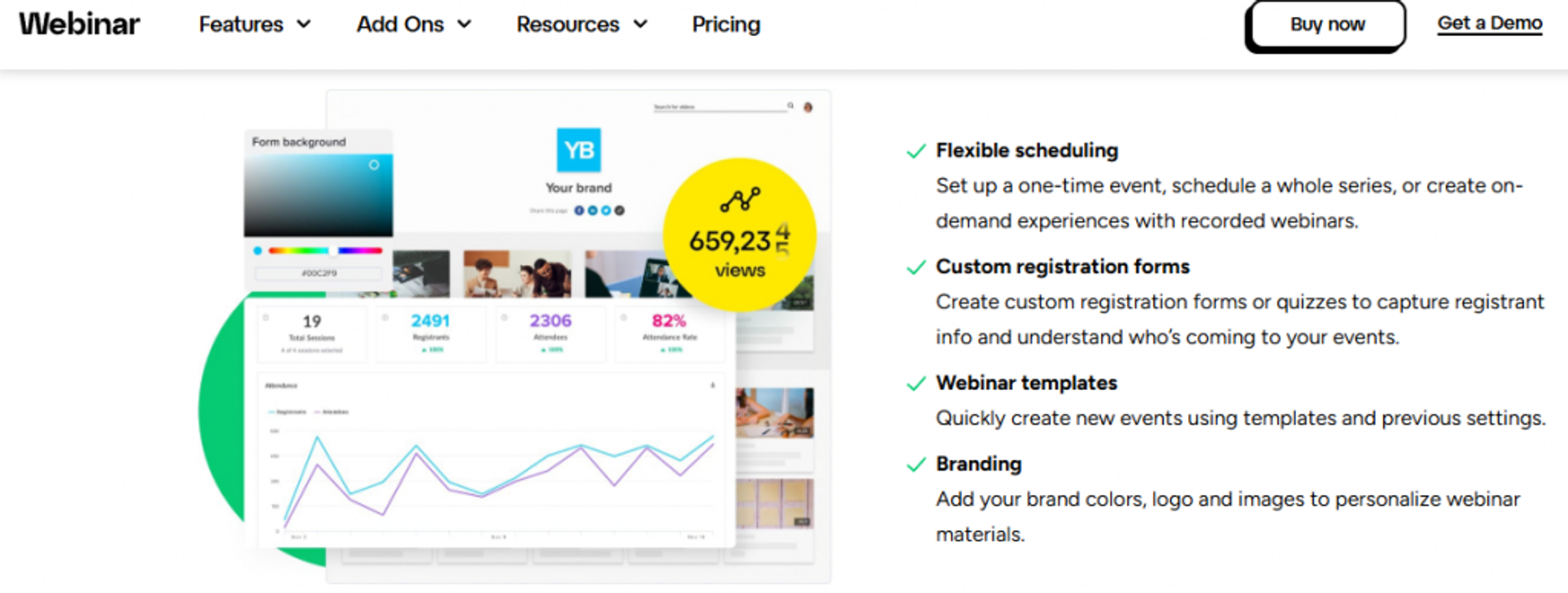
GoToWebinar is best for corporate and training teams that need dependable, no-fuss live broadcasts, because it offers a simple organizer backend with reliable reporting, but it may not fit operators who need funnels, in-webinar selling, or modern engagement design.
Quick Fit
| Attribute | Detail |
|---|---|
| Best for | Corporate training and internal broadcast teams |
| Skip if | You want sales funnels, checkout, or a native CRM |
| Strongest edge | Straightforward setup and steady reporting for standard events |
| Biggest trade-off | No conversion tooling; support and audio complaints noted |
| Pricing snapshot | Flat monthly, attendee-based, $49 to $499/month |
Why GoToWebinar Ranks #3
GoToWebinar ranks here on reliability and simplicity, not revenue design. It has run corporate webinars for years, and its organizer view is easy for a non-technical presenter to learn. For scheduled training or a monthly update, it does the job.
But it treats a webinar as an event, not a funnel. You get registration and reporting, yet no built-in offers, checkout, or evergreen automation. Its Simulive option (pre-recorded playback on GoTo Stage) exists on the Flex plan, but the tool still hands sales work back to you. Small teams often weigh the GoToWebinar alternatives for small businesses for this reason.
What GoToWebinar Does Well
- Simple event setup, so a training lead can schedule and launch without technical help.
- Reliable core reporting, giving attendance and engagement summaries for internal review.
- Simulive support through GoTo Stage, letting teams replay a recorded session on a schedule.
- Established integrations, connecting to common CRM and marketing tools for data hand-off.
Where GoToWebinar Falls Short
- No sales funnel or checkout. You cannot sell an offer inside the webinar.
- Audio and reliability gripes. Reviewers report occasional cut-offs during live sessions.
- Support is slow. Operators describe ticket-based help that lags in urgent moments.
- Dated engagement design. The attendee experience feels older than newer browser-first tools.
Decision Scorecard
| Evaluation criterion | GoToWebinar fit | Why it matters |
|---|---|---|
| Live webinars | Strong | Dependable for scheduled corporate broadcasts |
| Simulated live / automated | Partial | Simulive on GoTo Stage, but limited depth |
| Evergreen automation | Weak | No true evergreen or just-in-time funnels |
| Funnel pages | Weak | Registration only, no thank-you or offer pages |
| Engagement | Partial | Polls and Q&A exist; design feels dated |
| CRM and follow-up | Weak | No native CRM; relies on integrations |
| Monetization | Weak | No in-webinar checkout |
| Analytics | Partial | Solid attendance data, thin conversion view |
| Integrations | Strong | Broad connector library |
| Pricing fit | Partial | Climbs sharply at higher attendee tiers |
| Best-fit buyer | Partial | Fits training, not sales funnels |
Reviews
Operators consistently praise reliability but flag support and cost.
“It is stable and easy for our attendees, but customer support is slow and the price keeps climbing as we grow.”
Verified User GoToWebinar G2 Verified Review
Best For / Skip If
Choose GoToWebinar if you run scheduled internal training or corporate broadcasts and value a stable, familiar backend. Skip it if you want webinars to sell offers, because you will bolt on pages, email, and checkout elsewhere. If selling is the goal, our EasyWebinar vs GoToWebinar comparison shows the gap.
4. Demio
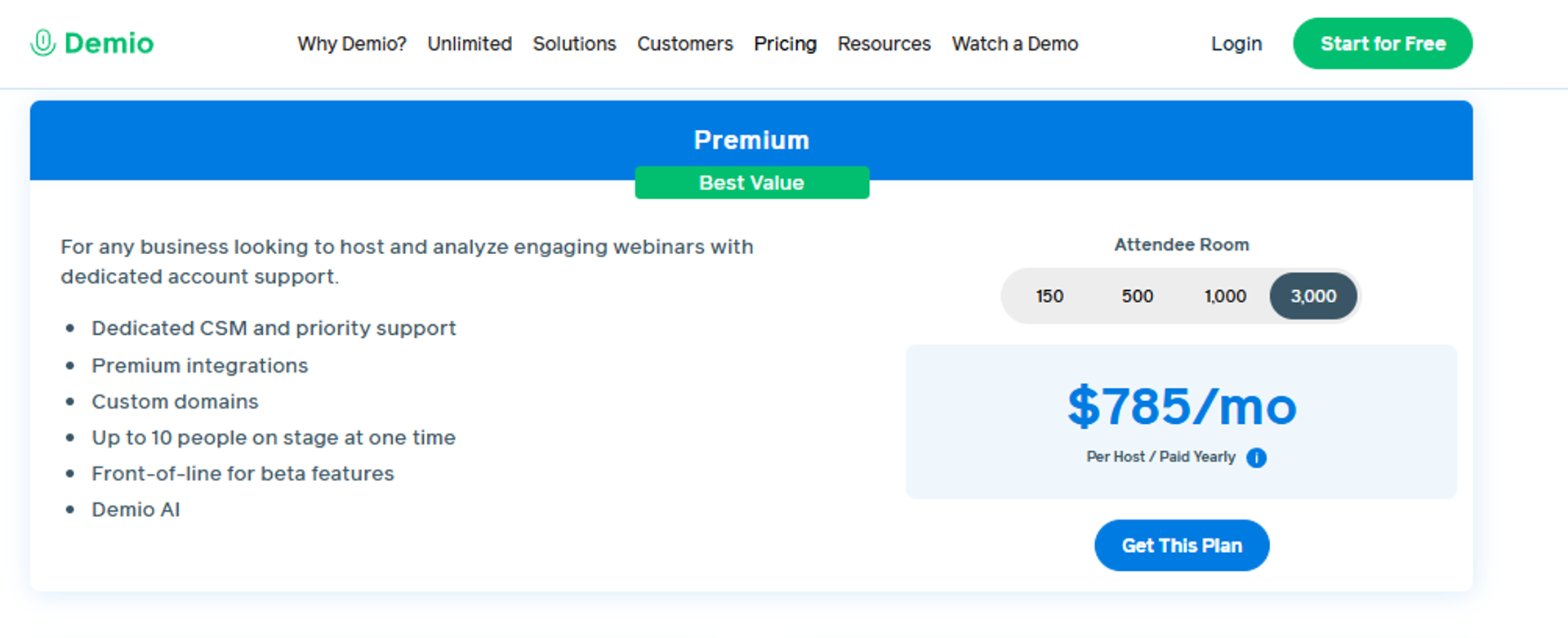
Demio is best for marketing teams that want a clean, no-download attendee experience for lead-gen webinars, because it offers a polished browser-based interface with solid engagement tools, but it may not fit operators who need built-in email automation, AI, or white-label branding.
Quick Fit
| Attribute | Detail |
|---|---|
| Best for | Marketing teams running branded lead-gen webinars |
| Skip if | You need native email/SMS automation or white-labeling |
| Strongest edge | Clean browser-based room with strong HubSpot and Marketo ties |
| Biggest trade-off | Lacks email/SMS automation and AI; costs push above $2,000/year with add-ons |
| Pricing snapshot | $49 to $234/month, attendee-based (50 to 1,000 attendees) |
Why Demio Ranks #4
Demio ranks here on attendee experience and marketing integrations. Registrants join in a browser with no download, which lifts show-up rates for cold audiences. Its HubSpot, Salesforce, Marketo, and Pardot connectors are genuinely strong.
But Demio prioritizes polish over full revenue mechanics. It has no native email or SMS automation, no AI tools, and no white-label branding on standard plans. That forces extra tools and pushes real cost above $2,000 a year. Teams comparing options often review the top Demio alternatives to close those gaps.
What Demio Does Well
- No-download browser room, which reduces friction at the door and lifts show-up rates.
- Premium CRM integrations to HubSpot, Salesforce, Marketo, and Pardot for clean lead flow.
- Solid live engagement, including polls, chat, handouts, and featured actions.
- Automated and on-demand webinars on paid tiers for basic evergreen delivery.
Where Demio Falls Short
- No native email or SMS automation. Follow-up needs a separate tool.
- No AI funnel or content tools on standard plans.
- Audio issues reported. Some reviewers note sound glitches during sessions.
- Data export blocked after canceling, which reviewers flag as a real risk.
Decision Scorecard
| Evaluation criterion | Demio fit | Why it matters |
|---|---|---|
| Live webinars | Strong | Clean, reliable browser-based live rooms |
| Simulated live / automated | Partial | Automated and on-demand exist on paid tiers |
| Evergreen automation | Partial | Basic automation, shallower than dedicated evergreen tools |
| Funnel pages | Partial | Registration and Showcase, but no full funnel |
| Engagement | Strong | Polls, chat, handouts, and featured actions |
| CRM and follow-up | Partial | Strong integrations, but no native CRM or email |
| Monetization | Weak | No native in-webinar checkout |
| Analytics | Partial | Good engagement analytics, limited attribution |
| Integrations | Strong | Premium CRM connectors included |
| Pricing fit | Partial | Add-ons push total cost past $2,000/year |
| Best-fit buyer | Partial | Fits marketing lead-gen, not full revenue funnels |
Reviews
Reviewers love the interface but flag data and audio issues.
“The attendee experience is clean and simple, but we hit audio problems and lost easy access to our data after we canceled.”
Verified User Demio G2 Verified Review
Best For / Skip If
Choose Demio if your marketing team wants a polished, browser-first webinar tied into HubSpot or Marketo. Skip it if you need built-in email automation, AI, or checkout, because you will pay for those elsewhere. See how the stacks differ in our EasyWebinar vs Demio breakdown.
5. Livestorm
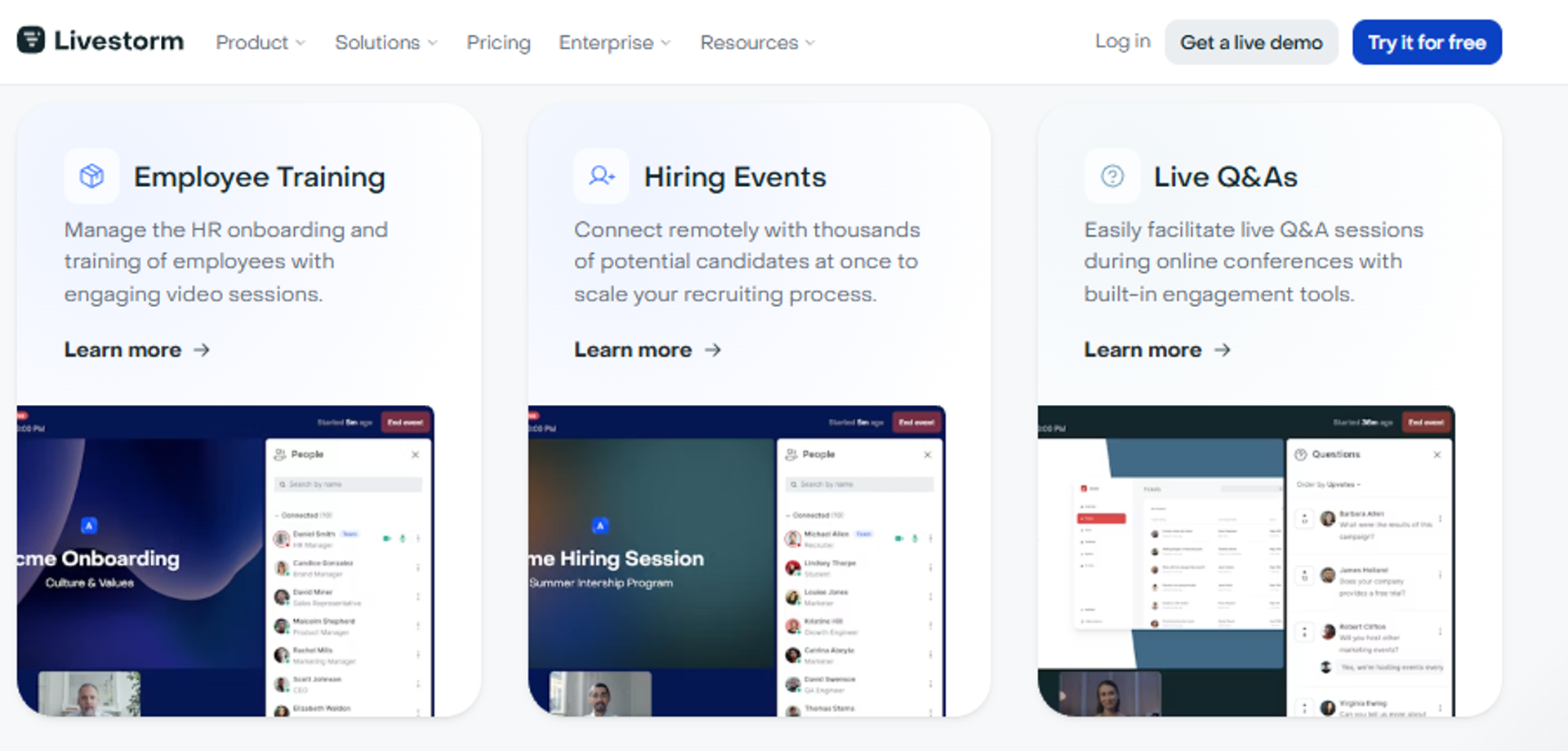
Livestorm is best for teams that want a fully browser-based experience with no installs, because it offers a clean interface and usage-based pricing, but it may not fit operators whose costs balloon as registrant volume grows.
Quick Fit
| Attribute | Detail |
|---|---|
| Best for | Teams wanting a no-download, browser-first event tool |
| Skip if | You run high-volume webinars and want predictable cost |
| Strongest edge | Fully browser-based, nothing to install for attendees |
| Biggest trade-off | Usage-based pricing gets expensive at scale |
| Pricing snapshot | Free plan, then Pro from ~$105/month (3,000 contacts) up to $825/month |
Why Livestorm Ranks #5
Livestorm ranks here on ease and accessibility. Everything runs in the browser, so attendees never download software. That lowers friction and suits webinars, product demos, and internal events alike.
The catch is the pricing model. Livestorm bills on active contacts, meaning every unique registrant who joins counts toward your tier. A 200-attendee event modeled at $3 per attendee runs about $7,200 a year, so cost climbs fast with volume. Reviewing the best webinar software comparison guide helps model that spend.
What Livestorm Does Well
- Zero-install browser room, which reduces attendee drop-off at the door.
- Free plan to start, letting small teams test before paying.
- Automated and on-demand webinars on Pro tiers for basic evergreen use.
- Clean engagement tools, including polls, Q&A, and multilingual support.
Where Livestorm Falls Short
- Usage-based cost scales sharply. Big events get expensive quickly.
- SSO and restreaming are add-ons, raising the real price.
- Lighter automation depth than dedicated evergreen platforms (verify).
- No native CRM, so follow-up relies on integrations.
Decision Scorecard
| Evaluation criterion | Livestorm fit | Why it matters |
|---|---|---|
| Live webinars | Strong | Reliable browser-based live rooms |
| Simulated live / automated | Partial | On-demand and automated on Pro tiers |
| Evergreen automation | Partial | Basic evergreen, less depth than specialists |
| Funnel pages | Partial | Registration pages, no full funnel |
| Engagement | Strong | Polls, Q&A, and multilingual support |
| CRM and follow-up | Weak | No native CRM, integration-dependent |
| Monetization | Weak | No native checkout |
| Analytics | Partial | Good engagement data, limited attribution |
| Integrations | Partial | Solid connectors, some behind higher tiers |
| Pricing fit | Weak | Contact-based billing climbs fast at scale |
| Best-fit buyer | Partial | Fits browser-first teams, not high-volume sellers |
Best For / Skip If
Choose Livestorm if you want a clean, no-download event tool and your registrant volume stays modest. Skip it if you run large or frequent webinars, because contact-based pricing can outrun your budget.
6. WebinarJam
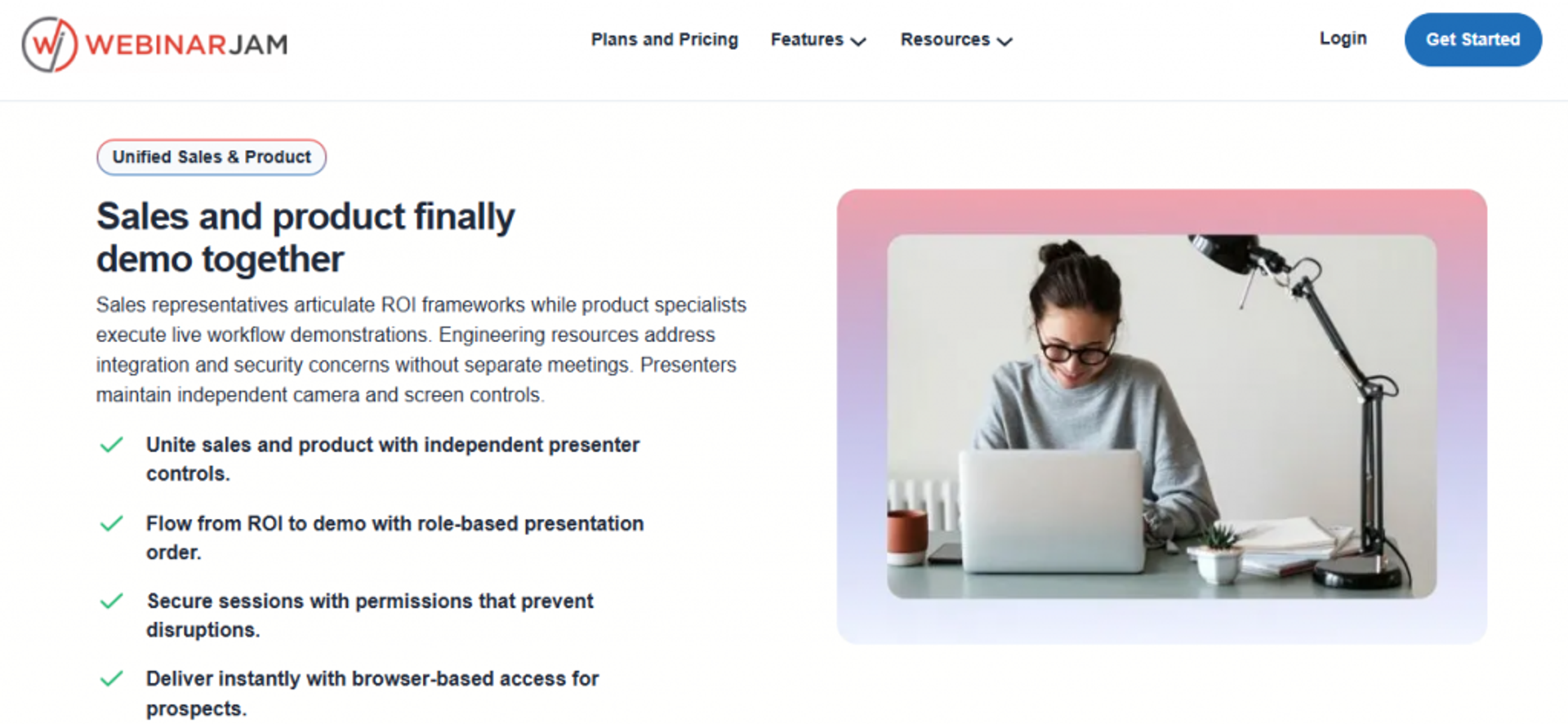
WebinarJam is best for budget-conscious operators who want live hosting with ready-made page templates, because it offers affordable live webinars with built-in registration pages, but it may not fit operators who need automation, since that requires buying EverWebinar separately.
Quick Fit
| Attribute | Detail |
|---|---|
| Best for | Cost-conscious operators running live webinars |
| Skip if | You need evergreen automation in the same tool |
| Strongest edge | Affordable live hosting with page templates included |
| Biggest trade-off | Automation is a separate product (EverWebinar) |
| Pricing snapshot | Flat annual, attendee-based (verify current tiers before publishing) |
Why WebinarJam Ranks #6
WebinarJam ranks here on price and speed to launch. It bundles live hosting with registration page templates, so a first-timer can get a webinar live fast without a designer. For a solo operator on a tight budget, that is real value.
Here is the honest trade-off with this ecosystem. The pitch is that WebinarJam plus EverWebinar “gives you everything,” but that is two products, two logins, and two bills. When you are starting out, the templates are all fine. As one operator wisdom goes, they may look plain, but they are done, and done beats perfect when you are getting your first sale. Operators weighing options often read up on the top WebinarJam alternatives.
What WebinarJam Does Well
- Affordable live hosting, lowering the barrier for first-time webinar sellers.
- Built-in page templates, so you launch registration and thank-you pages fast.
- Live selling features, including offer buttons and chat during the session.
- Multi-presenter support, useful for panels and co-hosted sessions.
Where WebinarJam Falls Short
- Automation is a separate product. Evergreen needs EverWebinar, bought separately.
- Setup can feel clunky, with reviewers noting a learning curve.
- No native CRM, so lead scoring and follow-up need other tools.
Decision Scorecard
| Evaluation criterion | WebinarJam fit | Why it matters |
|---|---|---|
| Live webinars | Strong | Affordable, template-driven live hosting |
| Simulated live / automated | Weak | Requires separate EverWebinar purchase |
| Evergreen automation | Weak | Not available inside WebinarJam alone |
| Funnel pages | Partial | Registration and thank-you templates included |
| Engagement | Partial | Live chat and offers, dated design |
| CRM and follow-up | Weak | No native CRM |
| Monetization | Partial | In-webinar offer buttons exist |
| Analytics | Partial | Basic attendance and click data |
| Integrations | Partial | Common email and CRM connectors |
| Pricing fit | Strong | Low entry cost for live-only use |
| Best-fit buyer | Partial | Fits budget live sellers, not automated funnels |
Best For / Skip If
Choose WebinarJam if you want cheap, fast live webinars and do not need automation yet. Skip it if evergreen matters to you, because you will pay for a second product to get there. Our EasyWebinar vs WebinarJam page maps the split-tool cost.
7. EverWebinar
EverWebinar is best for existing WebinarJam users who want to add an automated arm, because it offers simple just-in-time scheduling for pre-recorded sessions, but it may not fit operators who want live and automated formats unified in one platform.
Quick Fit
| Attribute | Detail |
|---|---|
| Best for | WebinarJam users adding evergreen automation |
| Skip if | You want live and automated in a single tool |
| Strongest edge | Easy just-in-time toggle for evergreen scheduling |
| Biggest trade-off | Sold separately from WebinarJam; two-tool management |
| Pricing snapshot | Flat annual (verify current tiers before publishing) |
Why EverWebinar Ranks #7
EverWebinar ranks here as the automated companion to WebinarJam. Its standout is just-in-time scheduling, meaning a pre-recorded session appears to start within a minute or so of a visitor landing, so it feels timely without being live. You toggle it on, set the window, and the tool creates that “a session is starting soon” pull.
The structural issue is the split product. You buy and manage two separate tools to cover live and automated. That fragmentation is exactly where data gaps creep in, and where a couple hundred opt-ins can go missing between systems if you are not watching the tech closely. A single automated webinar engine avoids that seam.
What EverWebinar Does Well
- Just-in-time scheduling, creating the feeling of a session about to start.
- Simulated live playback, running proven recordings on a repeating schedule.
- Reminder sequences, nudging registrants to show up for the automated session.
- Shared design with WebinarJam, so the two tools feel familiar together.
Where EverWebinar Falls Short
- Separate product and bill from WebinarJam.
- No native CRM, so follow-up depends on integrations.
- Setup complexity across two tools raises the chance of tech gaps.
Decision Scorecard
| Evaluation criterion | EverWebinar fit | Why it matters |
|---|---|---|
| Live webinars | Weak | Live requires WebinarJam separately |
| Simulated live / automated | Strong | Purpose-built for automated playback |
| Evergreen automation | Strong | Just-in-time scheduling is its core |
| Funnel pages | Partial | Registration and replay pages included |
| Engagement | Partial | Simulated chat and offers |
| CRM and follow-up | Weak | No native CRM |
| Monetization | Partial | In-webinar offers supported |
| Analytics | Partial | Basic automated-session data |
| Integrations | Partial | Common email and CRM connectors |
| Pricing fit | Partial | Adds a second bill on top of WebinarJam |
| Best-fit buyer | Partial | Fits WebinarJam users, not unified-platform seekers |
Best For / Skip If
Choose EverWebinar if you already run WebinarJam and want a simple evergreen add-on. Skip it if you want live and automated in one system, because this is half of a two-tool setup.
8. WebinarNinja
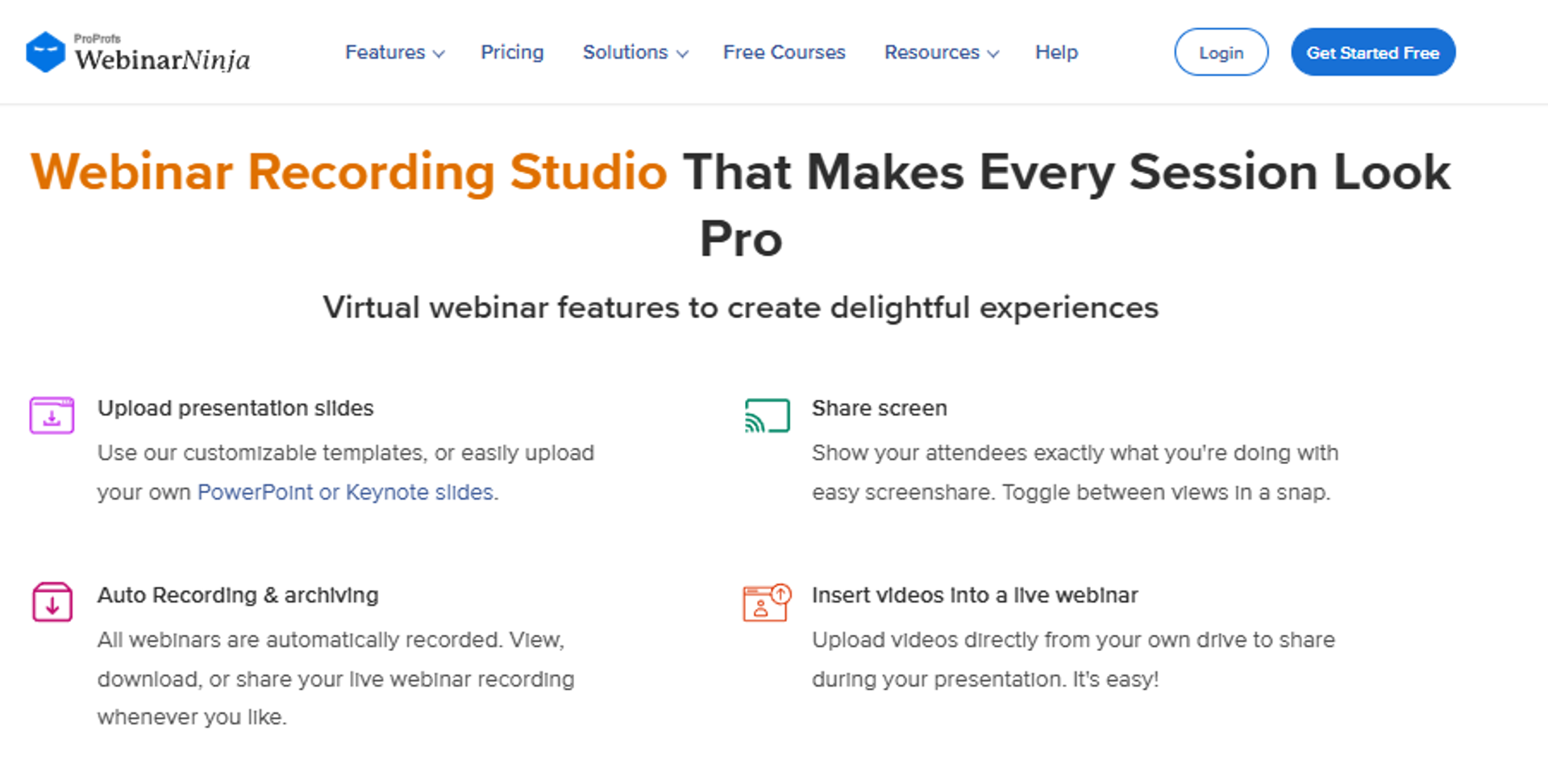
WebinarNinja is best for solo operators and small teams who want a simple mix of live and automated webinars in one tool, because it offers clean setup across formats, but it may not fit operators who need deep funnel, CRM, or monetization features.
Quick Fit
| Attribute | Detail |
|---|---|
| Best for | Solo operators wanting simple live and automated webinars |
| Skip if | You need deep funnels, native CRM, or rich analytics |
| Strongest edge | Clean, quick setup across live, automated, and series formats |
| Biggest trade-off | Lighter funnel, CRM, and conversion depth (verify) |
| Pricing snapshot | Flat monthly, attendee-based (verify current tiers before publishing) |
Why WebinarNinja Ranks #8
WebinarNinja ranks here on simplicity across formats. It handles live, automated, series, and on-demand webinars in one interface, which keeps things easy for a solo operator. Setup is fast, and the learning curve is gentle.
The trade-off is depth. It covers the basics of each format but does not match dedicated tools on funnel design, CRM, or analytics. For a beginner selling a single offer, that simplicity can be a feature, not a flaw. Our guide to the top automated webinar platforms of 2026 puts that depth in context.
What WebinarNinja Does Well
- Multiple formats in one tool, covering live, automated, and series webinars.
- Fast, simple setup, so beginners launch without a steep learning curve.
- Built-in registration pages, reducing the need for a separate page builder.
- Live engagement basics, including polls, chat, and offers.
Where WebinarNinja Falls Short
- Shallow funnel depth compared to full revenue platforms (verify).
- No robust native CRM for lead scoring and segmentation (verify).
- Basic analytics, limiting conversion attribution (verify).
Decision Scorecard
| Evaluation criterion | WebinarNinja fit | Why it matters |
|---|---|---|
| Live webinars | Strong | Simple, reliable live hosting |
| Simulated live / automated | Strong | Automated and series formats included |
| Evergreen automation | Partial | Automated webinars exist, limited depth (verify) |
| Funnel pages | Partial | Registration pages, lighter funnel (verify) |
| Engagement | Partial | Polls, chat, and offers |
| CRM and follow-up | Weak | No robust native CRM (verify) |
| Monetization | Partial | Basic in-webinar offers (verify) |
| Analytics | Partial | Basic reporting (verify) |
| Integrations | Partial | Common connectors (verify) |
| Pricing fit | Partial | Reasonable for simple use (verify) |
| Best-fit buyer | Partial | Fits solo simplicity, not deep funnels |
Best For / Skip If
Choose WebinarNinja if you are a solo operator wanting live and automated webinars without complexity. Skip it if you need deep funnels, CRM, or detailed attribution to scale revenue. Compare the trade-offs in our EasyWebinar vs Webinar Ninja guide.
9. BigMarker
BigMarker is best for teams running large, highly branded virtual events and summits, because it offers deep customization and no-download hosting at scale, but it may not fit smaller operators who want transparent, self-serve pricing.
Quick Fit
| Attribute | Detail |
|---|---|
| Best for | B2B teams running large branded events and summits |
| Skip if | You are a solo operator wanting simple, published pricing |
| Strongest edge | Deep white-label customization for large virtual events |
| Biggest trade-off | Quote-based pricing, not publicly listed |
| Pricing snapshot | Quote-based, not publicly listed |
Why BigMarker Ranks #9
BigMarker ranks here on customization and scale. It is browser-based, white-label, and built for big B2B webinars, summits, and hybrid events. For a marketing team that wants a fully branded, no-download experience, it delivers.
The trade-off is access and cost. Pricing is quote-based and not published, so smaller operators cannot easily self-serve or budget. It is enterprise-oriented, which suits large teams but adds procurement friction for everyone else. For summit planners, our guide to choosing a virtual event platform for conferences helps frame the decision.
What BigMarker Does Well
- Deep white-label branding, so events feel fully owned by your brand.
- No-download browser experience, reducing attendee friction at scale.
- Large-event and summit support, handling complex multi-session formats.
- Automated and evergreen options, extending events beyond the live date.
Where BigMarker Falls Short
- Pricing is quote-based and not public, slowing evaluation.
- Enterprise orientation adds procurement friction for small teams.
- Complexity can outpace simple solo needs.
Decision Scorecard
| Evaluation criterion | BigMarker fit | Why it matters |
|---|---|---|
| Live webinars | Strong | Built for large live events |
| Simulated live / automated | Strong | Automated and evergreen supported |
| Evergreen automation | Partial | Available, depth varies by plan |
| Funnel pages | Strong | Highly customizable event pages |
| Engagement | Strong | Rich engagement and networking tools |
| CRM and follow-up | Partial | Strong integrations, no core native CRM |
| Monetization | Partial | Ticketing and offers available |
| Analytics | Strong | Detailed event analytics |
| Integrations | Strong | Broad enterprise connectors |
| Pricing fit | Weak | Quote-based, not transparent |
| Best-fit buyer | Partial | Fits large branded events, not solo sellers |
Best For / Skip If
Choose BigMarker if you run large branded summits or hybrid events and need deep customization. Skip it if you want simple, published pricing and a fast self-serve start.
10. Webex Webinars
Webex Webinars is best for enterprises already inside a Cisco security stack, because it offers enterprise-grade security and reliable large-scale hosting, but it may not fit operators who need conversion funnels or modern marketing engagement.
Quick Fit
| Attribute | Detail |
|---|---|
| Best for | Enterprises standardized on Cisco security |
| Skip if | You need sales funnels or marketing engagement design |
| Strongest edge | Enterprise-grade security and scale |
| Biggest trade-off | Reviewers cite streaming limits and lag; no funnels |
| Pricing snapshot | Quote-based and tiered (verify before publishing) |
Why Webex Webinars Ranks #10
Webex ranks here on enterprise security and integration inside the Cisco ecosystem. For an IT-led organization already on Webex, it is a natural, compliant choice for large broadcasts and town halls.
But it is a broadcast tool, not a revenue engine. It offers no sales funnels, no in-webinar checkout, and no native CRM built for selling. Reviewers also note streaming limitations and occasional lag at scale. Marketing teams often review the Webex alternative options for conversion features.
What Webex Webinars Does Well
- Enterprise-grade security, meeting strict IT and compliance requirements.
- Large-scale reliability, handling big internal and external audiences.
- Tight Cisco ecosystem fit, simplifying deployment for existing Webex shops.
- Core engagement tools, including Q&A and polling for large sessions.
Where Webex Webinars Falls Short
- No conversion funnels or checkout for selling.
- Streaming limits and lag reported by reviewers at scale.
- No native CRM built for follow-up and lead scoring.
Decision Scorecard
| Evaluation criterion | Webex Webinars fit | Why it matters |
|---|---|---|
| Live webinars | Strong | Reliable enterprise-scale live |
| Simulated live / automated | Weak | No true automated funnels |
| Evergreen automation | Weak | No evergreen selling |
| Funnel pages | Weak | Registration only |
| Engagement | Partial | Q&A and polls, limited marketing design |
| CRM and follow-up | Weak | No native selling CRM |
| Monetization | Weak | No in-webinar checkout |
| Analytics | Partial | Attendance data, thin conversion view |
| Integrations | Strong | Deep enterprise connectors |
| Pricing fit | Partial | Quote-based, enterprise-tier cost |
| Best-fit buyer | Partial | Fits Cisco enterprises, not sellers |
Best For / Skip If
Choose Webex Webinars if your enterprise runs on Cisco and needs secure, large-scale broadcasts. Skip it if you want webinars to sell, because it lacks funnels, checkout, and a selling CRM.
11. Microsoft Teams Webinars
Microsoft Teams Webinars is best for organizations standardized on Microsoft 365, because it offers built-in registration inside a tool employees already use, but it may not fit operators who need strong reporting, branding, or conversion tooling.
Quick Fit
| Attribute | Detail |
|---|---|
| Best for | Organizations already running Microsoft 365 |
| Skip if | You need branded funnels, deep reporting, or selling tools |
| Strongest edge | Native to the Microsoft 365 stack, no new tool to buy |
| Biggest trade-off | Reviewers call reporting “basic” with limited branding |
| Pricing snapshot | Bundled with M365 license (verify before publishing) |
Why Microsoft Teams Webinars Ranks #11
Teams Webinars ranks here on convenience for Microsoft shops. If your organization already pays for Microsoft 365, webinar registration and hosting come bundled, so there is nothing new to buy.
But it is a meeting tool with a registration layer, not a marketing platform. Reviewers describe reporting as basic and branding as limited. It fits internal training and simple external sessions, not sales funnels. For teams evaluating options, our roundup of top video conferencing tools for teams and webinars helps.
What Microsoft Teams Webinars Does Well
- Native M365 integration, so it works inside tools employees already use.
- Bundled cost, avoiding a separate webinar subscription.
- Built-in registration, covering the basics for internal and simple external events.
- Enterprise security, backed by Microsoft’s compliance framework.
Where Microsoft Teams Webinars Falls Short
- Reporting is basic, limiting conversion insight.
- Limited branding, so events look generic.
- No sales funnels or checkout for revenue.
Decision Scorecard
| Evaluation criterion | Teams Webinars fit | Why it matters |
|---|---|---|
| Live webinars | Strong | Reliable for internal and external sessions |
| Simulated live / automated | Weak | No automated selling formats |
| Evergreen automation | Weak | No evergreen funnels |
| Funnel pages | Weak | Registration only |
| Engagement | Partial | Polls and Q&A, limited design |
| CRM and follow-up | Weak | No native selling CRM |
| Monetization | Weak | No in-webinar checkout |
| Analytics | Weak | Basic reporting |
| Integrations | Strong | Deep Microsoft ecosystem fit |
| Pricing fit | Strong | Bundled with existing M365 |
| Best-fit buyer | Partial | Fits M365 orgs, not sellers |
Best For / Skip If
Choose Microsoft Teams Webinars if your organization lives in Microsoft 365 and needs simple internal or external sessions. Skip it if you want branded funnels, deep reporting, or in-webinar selling.
12. Contrast
Contrast is best for teams that want to repurpose webinars into content fast, because it offers strong AI snippet, subtitle, and transcript tools, but it may not fit operators who need post-event editing or full funnel selling.
Quick Fit
| Attribute | Detail |
|---|---|
| Best for | Content teams repurposing webinars into clips and transcripts |
| Skip if | You need post-event editing or a full sales funnel |
| Strongest edge | Fast AI clipping, subtitles, and transcripts |
| Biggest trade-off | Recording is final; no post-event editing |
| Pricing snapshot | Flat monthly, quote-based (verify before publishing) |
Why Contrast Ranks #12
Contrast ranks here on AI content repurposing. It turns a webinar into clips, subtitles, and transcripts quickly, which helps content teams feed social and blog channels from one event. That speed is its clear edge.
The limitation is editing. Reviewers note the recording is final once captured, with no post-event trimming. It is a content engine, not a revenue funnel, so selling tools are thin. Teams focused on repurposing can pair it with strong webinar engagement tools to lift live results first.
What Contrast Does Well
- Fast AI clipping, turning one webinar into many social snippets.
- Automatic subtitles and transcripts, speeding content production.
- Live hosting basics, covering standard webinar delivery.
- Quick SPOC support, helping teams move fast.
Where Contrast Falls Short
- No post-event editing. The recording is final once captured.
- Thin selling tools, with no full funnel or checkout.
- Narrow focus on content, not revenue.
Decision Scorecard
| Evaluation criterion | Contrast fit | Why it matters |
|---|---|---|
| Live webinars | Partial | Handles standard live delivery |
| Simulated live / automated | Weak | Not built for automated funnels |
| Evergreen automation | Weak | No evergreen selling |
| Funnel pages | Weak | No full funnel |
| Engagement | Partial | Basic live engagement |
| CRM and follow-up | Weak | No native CRM |
| Monetization | Weak | No in-webinar checkout |
| Analytics | Partial | Content-focused analytics |
| Integrations | Partial | Common content and CRM connectors |
| Pricing fit | Partial | Quote-based (verify) |
| Best-fit buyer | Partial | Fits content teams, not sellers |
Best For / Skip If
Choose Contrast if your priority is turning webinars into clips, subtitles, and transcripts fast. Skip it if you need post-event editing or a full webinar sales funnel.
13. Zoho Webinar
Zoho Webinar is best for teams already using the Zoho suite, because it offers tight integration with Zoho CRM and email, but it may not fit operators who need deep evergreen automation or advanced conversion tooling.
Quick Fit
| Attribute | Detail |
|---|---|
| Best for | Existing Zoho-ecosystem users |
| Skip if | You need deep evergreen or advanced funnel tools |
| Strongest edge | Native fit with the wider Zoho suite |
| Biggest trade-off | Lighter conversion and evergreen depth (verify) |
| Pricing snapshot | Attendee-based, part of Zoho (verify before publishing) |
Why Zoho Webinar Ranks #13
Zoho Webinar ranks here as the natural pick for Zoho users. If your CRM, email, and campaigns already run on Zoho, the webinar tool slots in with minimal setup. That ecosystem fit is its main value.
Outside that context, it is a straightforward live webinar tool. It lacks the deep evergreen automation and conversion tooling that dedicated revenue platforms offer, so its appeal narrows to existing Zoho customers. A dedicated sales CRM tied to webinar behavior is where full revenue platforms pull ahead.
What Zoho Webinar Does Well
- Native Zoho CRM and email fit, keeping lead data in one ecosystem.
- Simple live hosting, covering standard webinar needs.
- Registration and reminders, handling the basics of attendance.
- Cost efficiency for existing Zoho subscribers.
Where Zoho Webinar Falls Short
- Lighter evergreen depth than dedicated automation tools (verify).
- Limited conversion funnels for selling (verify).
- Value tied to Zoho, so standalone appeal is narrow.
Decision Scorecard
| Evaluation criterion | Zoho Webinar fit | Why it matters |
|---|---|---|
| Live webinars | Strong | Reliable standard live hosting |
| Simulated live / automated | Partial | Basic on-demand options (verify) |
| Evergreen automation | Weak | Limited evergreen depth (verify) |
| Funnel pages | Partial | Registration pages, light funnel (verify) |
| Engagement | Partial | Polls and Q&A basics |
| CRM and follow-up | Strong | Native Zoho CRM integration |
| Monetization | Weak | No robust in-webinar checkout (verify) |
| Analytics | Partial | Basic reporting inside Zoho (verify) |
| Integrations | Partial | Strong within Zoho, narrower outside |
| Pricing fit | Strong | Cost-efficient for Zoho users |
| Best-fit buyer | Partial | Fits Zoho shops, not standalone sellers |
Best For / Skip If
Choose Zoho Webinar if your business already runs on the Zoho suite and wants a tightly integrated webinar tool. Skip it if you need deep evergreen automation or a standalone revenue funnel.
Where EasyWebinar Fits Across This List
Reading the full 13, a pattern jumps out. Hosting tools like Zoom, GoToWebinar, Webex, and Teams give you a reliable room but no way to sell inside it. Split ecosystems like WebinarJam plus EverWebinar force two tools and two bills to cover live and automated. Marketing-first tools like Demio and Livestorm polish the attendee experience but hand email, CRM, and checkout back to you.
EasyWebinar sits at position one because it closes that gap. It runs live and evergreen in one place, builds the funnel with AI, takes payments inside the session, and feeds a native CRM, so one webinar becomes a repeatable revenue engine instead of a one-off event. That is the difference between a webinar hosting tool and a full all features revenue platform, and it is the axis a serious buyer should weigh before shortlisting two or three vendors to test.
Q2. How did we rank these webinar platforms (our scoring criteria)?
We scored each platform on five weighted criteria: Format Range and Scale (25%), Conversion and Monetization Features (25%), Pricing Transparency (20%), Setup and Usability (15%), and Verified User Reviews (15%), totaling 100%. Scores map to stars, from 0 to 20 as 1 star through 81 to 100 as 5 stars. EasyWebinar earns 5 stars for spanning live, evergreen, simulive, AI build, in-webinar payments, and CRM in one stack.
Why a Rubric Beats a Gut Feeling
Most webinar roundups rank on vibes. They lead with the tool everyone already knows, then reverse-engineer reasons. That is how a busy operator ends up with a reliable meeting room and no way to sell inside it.
I built this rubric the other way around. After looking at thousands of webinar funnels, one thing is clear to me: engagement ain’t cash. So we weight the things that actually move revenue, not the things that look nice in a demo. Zapier’s team took a similar disciplined path, testing roughly 60 tools before shortlisting just 7, which is the kind of filtering a real buyer needs. If you want the deeper logic, our guide to how to make money with webinars breaks down the revenue-first lens.
The Five Weighted Criteria ⚖️
Here is exactly how the 100 points break down, and what each one measures.
| Criterion | Weight | What it measures |
|---|---|---|
| Format Range and Scale | 25% | Live, simulated live, evergreen, just-in-time, on-demand, plus attendee capacity |
| Conversion and Monetization | 25% | Funnel pages, in-webinar offers, checkout, CRM, and follow-up |
| Pricing Transparency | 20% | Published pricing, honest tiers, and total cost at real volume |
| Setup and Usability | 15% | Time to launch, templates, and AI-assisted funnel build |
| Verified User Reviews | 15% | Real G2, Capterra, and Reddit feedback on reliability and support |
How Scores Become Stars ⭐
Each tool earns a weighted score out of 100, then maps to a star band.
- 0 to 20 points: 1 star
- 21 to 40 points: 2 stars
- 41 to 60 points: 3 stars
- 61 to 80 points: 4 stars
- 81 to 100 points: 5 stars
Format range and conversion carry half the weight combined, and that is deliberate. Simple scales, fancy fails. A tool that runs every format and sells inside the session beats one with a prettier waiting room but no checkout. This is the same standard we apply when evaluating the top automated webinar platforms of 2026.
Where EasyWebinar Lands
EasyWebinar scores maximum on Format Range and Scale and on Conversion and Monetization. It is the only entry that ships all major formats, in-webinar payments, and a native CRM in one platform, so it clears both heavy-weighted criteria at once. That is why it holds 5 stars, not brand preference. Every other tool trades away at least one of those axes, which the scorecards in each entry make plain. You can see the full all features set behind that score.
Q3. Which webinar platform fits your webinar type and audience scale, live, evergreen, or enterprise?
Match the platform to your format and scale. For automated or evergreen selling, choose just-in-time and simulive tools with behavior-based follow-up. For large live launches, prioritize sub-500ms streaming and high capacity. Reviewers flag Zoom, Webex, and GoToWebinar for lag at scale. EasyWebinar spans nine webinar types and pairs Dolby-grade streaming with in-webinar payments, so recorded sessions still convert.
The Pain: Dead Rooms and Laggy Launches
Two failures haunt operators. The first is the automated webinar that feels dead, where a stiff recording kills trust and nobody buys. The second is the live launch that lags, where video stutters and your poll fires 20 seconds late.
Both quietly nuke your numbers. A laggy live room drops engagement right when you ask for the sale. A lifeless evergreen session drops conversion across every replay. The format you pick has to match both your selling motion and your audience size. Our breakdown of live vs automated webinars maps that decision.
The Proof: Formats and Scale Compared
Here is how the field splits by capability. Just-in-time means a pre-recorded session that appears to start within about one to fourteen minutes of a visitor landing, so it feels timely without pretending to be live.
| Format or scale need | Strong fits | Weak fits |
|---|---|---|
| Large live launches | EasyWebinar, Zoom, Webex, BigMarker | WebinarNinja, Contrast |
| Evergreen and just-in-time | EasyWebinar, EverWebinar | Zoom, Teams, Webex |
| Enterprise security and scale | Webex, Teams, EasyWebinar | WebinarJam, WebinarNinja |
| Simulated live playback | EasyWebinar, EverWebinar, GoToWebinar | Zoom, Teams |
Reviewers back this up. Operators describe Zoom as glitchy under marketing load, GoToWebinar with audio cut-offs, and Webex with streaming lag at scale. Latency is a real ranking axis, even though most roundups mention delay only in passing. For teams needing broadcast stability, our live webinar software is built around low latency.
The Payoff: When to Automate
Here is the contested part, and I will give you both sides. Yuri Elkaim argues you should go evergreen from day one, since live show-up rates are rough. My read is different, and I could be wrong, but this is what I keep seeing.
Nail it live first. Reach a 5 to 10 percent conversion rate on real live sessions, then automate the winner. An automated webinar without traffic is like a billboard in the desert, so build the audience live before you scale it. One EasyWebinar operator did exactly that and reported strong results after switching to an automated webinar funnel.
“With my live class I used to sell 10-12 courses. With EasyWebinar I sold 25 courses within 3 weeks of my evergreen launch.”
Laura C. EasyWebinar G2 Verified Review
“Zoom Webinar is ridiculously glitchy, missing a lot of core webinar features that should be table stakes today.”
Casey S. Zoom Webinars G2 Verified Review
EasyWebinar covers all nine formats, from live and simulive to just-in-time and on-demand, and pairs Dolby-grade audio with in-webinar checkout so an evergreen session monetizes unattended. Confirm the top-end concurrent capacity figure with the vendor before you publish any hard number.
Q4. Which webinar platform turns webinars into a revenue system, analytics, CRM, monetization, and stack consolidation?
A webinar platform becomes a revenue system when it tracks attendee-level behavior, feeds a CRM, takes payments in the player, and replaces the seven-tool stack of pages, email, SMS, CRM, storage, multistream, and payments, roughly a $600 to $1,000 per month bundle. Reviewers call Zoom, Teams, and GoToWebinar analytics “basic.” EasyWebinar unifies drop-off analytics, EasyCRM, and native checkout so no data leaks between tools.
The Pain: Flying Blind While Tools Break
Here is the moment that costs operators real money. You run the webinar, then open five dashboards that do not agree. Attendance lives in one tool, opt-ins in another, and sales somewhere else.
I have lived the worst version of this. Our Zapier account hit its plan limit mid-launch, and we caught it just four hours before the webinar. There was a couple-hundred-person discrepancy of opt-ins missing from the CRM. That is the silent tax of a stitched-together stack: the tech breaks quietly and you find out late. A unified sales CRM removes that seam.
The Proof: Depth and the Cost Math
Real analytics track attendee-level behavior, meaning watch time, poll answers, offer clicks, and the exact minute people drop off. Basic reporting just counts who showed up. That gap decides whether you can fix a leaky funnel.
| Capability | Deep-analytics tools | “Basic” tools |
|---|---|---|
| Drop-off and offer-click tracking | EasyWebinar | Zoom, Teams |
| Native CRM and lead scoring | EasyWebinar | Zoom, GoToWebinar, Demio |
| In-webinar checkout | EasyWebinar | Zoom, Webex, Teams |
| Clean data export | EasyWebinar | Demio (blocked after canceling) |
Reviewers are blunt about the gaps. Zoom has “no real webinar analytics,” Teams reporting reads as “basic,” and Demio users reported losing easy access to their data after canceling. Add the separate tools you bolt on, and a fragmented stack runs $600 to $1,000 a month. Our overview of webinar analytics shows what attendee-level depth looks like in practice.
The Payoff: One Monday Action
Do one thing Monday. Set a watch-time threshold in your analytics, find the exact minute buyers drop, and rewrite that segment. The confirmation page after opt-in is seen by 100 percent of your leads, so fixing the front of the funnel has the biggest knock-on effect.
One honest caution, since I sell an all-in-one myself. Be skeptical of any tool claiming to be your everything, your CRM, your community, and your email service at once. That product rarely exists, and when it does, it is often weak across the board. If you want to sell inside the session, our paid webinars feature runs native checkout.
“The attendee experience is clean, but we lost easy access to our data after we canceled our plan.”
Verified User Demio G2 Verified Review
“Once I have run one webinar, I can clone and set up multiple in a breeze. My only dislike is there can be some bugs at times.”
Darrin B. EasyWebinar G2 Verified Review
We built EasyWebinar as the endpoint ecosystem for exactly this problem. Attendee-level analytics flow into EasyCRM lead scoring, native email and SMS handle follow-up, and in-webinar checkout runs on Stripe, PayPal, and PayU, so the data never leaks between third-party tools.
Q5. How do webinar platform prices compare, and which delivers the best value in 2026?
Webinar pricing splits by attendee tier and feature gating, not headline price. A G2 user notes just-in-time scheduling costs “about double the basic subscription.” Entry plans look cheap until automation, deeper analytics, and higher caps sit behind premium tiers. Compare total cost at your real attendee volume plus the tools you would otherwise bolt on. Value is revenue per dollar, not lowest price.
The Pain: The Sticker Price Lies
The advertised number is almost never what you pay. Two things inflate it: attendee tiers and feature gates. Feature gating means a tool locks the parts you actually need behind a higher plan.
Here is the trap I see operators fall into. They pick the cheapest plan, then discover evergreen automation, real analytics, or a bigger attendee cap all cost extra. One reviewer flagged that just-in-time scheduling ran about double the basic subscription. Reviewing transparent webinar pricing up front avoids that surprise.
The Proof: Published 2026 Pricing
Here is where the field lands on published entry pricing. Verify each figure before publishing, since vendors change tiers often.
| Platform | Entry price (published) | What climbs the cost |
|---|---|---|
| Zoom Webinars | From $79/month add-on | Attendee tiers, monetization on Plus |
| GoToWebinar | $49 to $499/month | Higher attendee caps |
| Demio | $49 to $234/month | Add-ons push past $2,000/year |
| Livestorm | Free, then ~$105/month | Per-contact billing at scale |
| EasyWebinar | Flat monthly (verify tiers) | Advanced automation on premium |
The Payoff: Compute Your True Cost
Do not compare stickers. Compute your real monthly cost at your actual attendee volume, then add the separate tools each platform forces you to buy. A cheap host plus a page builder, an email tool, and a checkout is rarely cheap. Our best webinar software comparison guide shows how those hidden costs stack up.
Then reframe the whole question. As I tell operators, 30 percent of a massive number is amazing, but 30 percent of zero is nothing. The right question is what your back-end offer looks like, because the higher the offer, the more you can spend up front. That is the core lesson in our guide to how to make money with webinars.
“Once I have run one webinar, I can clone and set up multiple in a breeze. My only dislike is there can be some bugs at times.”
Darrin B. EasyWebinar G2 Verified Review
I will not quote an EasyWebinar price here, because I want you to verify current tiers directly. I will say this: we position on value per dollar, since one platform replaces the seven tools most operators stitch together.
Q6. Which webinar platform is right for your industry and buyer, creators, agencies, and enterprise?
Coaches and course creators selling above $200 need evergreen funnels, in-webinar checkout, and behavior-based follow-up. Agencies need fast branded launches and clean reporting. Enterprises need SOC 2 Type II, SSO/SAML, and large-scale streaming. Webex and Teams bring security but thin analytics. EasyWebinar fits webinar-led sellers and meets the enterprise bar with SOC 2 Type II and GDPR, plus conversion features legacy tools lack.
The Scene: A Course That Sold Zero
Let me take you back to my own bad day. When the housing market crashed, I went from mid-six figures to $15,000 in a single year. I nearly lost my house.
So I spent six months building an online course. I launched it, and then, crickets. Nobody bought it. The only thing that finally generated sales was a webinar in front of that offer. That is exactly why webinars are the best way to sell online courses.
Creators and Agencies: The $200 Rule
Here is the filter I use. If your offer is above $200, a webinar is usually worth the build, because you have room to sell and follow up. Below that, the math often does not justify it.
For coaches, course creators, and agencies, the must-have features are consistent.
- Evergreen funnels that run the offer on repeat.
- In-webinar checkout so a session closes the sale.
- Behavior-based follow-up that routes warm attendees to a human.
- White-label branding and clean client reporting for agencies.
One sales webinar can genuinely replace several reps in front of your pipeline, which is why creators lean on it so hard. To sell inside the session, our paid webinars feature runs native checkout.
“EasyWebinar is a game-changer for course creators. Setting up automated and live webinars is straightforward.”
Jennifer B. EasyWebinar G2 Verified Review
Enterprise: The Procurement Checklist 🔒
Enterprise buyers judge on a different axis. The must-haves are compliance and control, not just conversion.
| Enterprise need | What it means | Strong fits |
|---|---|---|
| SOC 2 Type II | Audited security controls over time | EasyWebinar, Webex, Teams |
| GDPR | EU data-protection compliance | EasyWebinar, Webex |
| Large-scale streaming | High concurrent attendee capacity | Webex, Teams, EasyWebinar |
| Admin roles and branding | Custom domain, user controls | EasyWebinar |
Webex and Teams bring the security, but reviewers call Teams reporting “basic” with limited branding. EasyWebinar meets the SOC 2 Type II and GDPR bar while keeping the conversion tooling legacy tools drop. Confirm SSO/SAML support and top-end concurrent capacity with the vendor before you publish any hard figure. See our GDPR compliance details for the full data-protection picture.
Q7. How do you choose the right webinar platform, and avoid the silent mistakes that make any tool fail?
Choose by funnel maturity, not feature count. Starting out, run live and iterate fast. Converting 5 to 10 percent live, add automation. Scaling, consolidate pages, CRM, payments, and analytics into one platform. But even the best tool fails silently, since a dead mobile button or a maxed-out Zapier plan nukes your cost per lead. Test the full funnel, model a worst case, and drive traffic first.
The Standard Read Gets This Backwards
Most guides tell you to pick the tool with the most features. I think that is exactly wrong. The tool is rarely your bottleneck.
Choose by where you are in the journey, in three plain stages.
- Starting out: run live, keep pages simple, and iterate weekly.
- Converting 5 to 10 percent live: automate the winning session.
- Scaling: consolidate pages, CRM, payments, and analytics into one system.
Simple scales, fancy fails. I have watched operators burn months on a “monster funnel” with endless branching emails that never worked, when a clean live session would have sold. Our live webinar software is built for that fast, simple start.
The Silent Failures ⚠️
Here is what actually kills webinars, and none of it is the brand on the box.
- The tech breaks quietly, like a mobile registration button that does not work, and your cost per lead climbs while you stare at the wrong metric.
- The offer runs too long. I once watched a three-hour webinar produce a single sale, because a rich audience will not sit that long.
- Small copy choices leak revenue. Putting the join link in an SMS once nuked our call-booking rate, even though show-up looked fine.
Your Monday fix is unglamorous. Test the entire funnel end to end on a phone, model a worst-case cost per lead before you spend, and drive traffic before you automate. Our roundup of webinar best practices for registrations and sales covers those checks in depth.
“The best webinar platform! I can run live and automated webinars from one place without stitching tools together.”
Darrin B. EasyWebinar G2 Verified Review
Where This Leaves You
Picture the before and after. Before, you are juggling a host, a page builder, an email tool, and a checkout, praying nothing breaks four hours before you go live. After, one system runs the whole funnel, so you spend your energy on the offer, not the plumbing.
We built EasyWebinar’s AI webinar builder for exactly that shift, letting you stand up a full funnel in minutes instead of weeks, and removing the integration gaps where opt-ins silently vanish.
So here is the question I am sitting with as we head toward 2027. As AI makes evergreen funnels effortless, I think live workshops quietly come roaring back, because attention gets scarce when everything feels automated. If you are building a webinar right now, tell me what you are selling and who it is for, and I will tell you honestly whether you should start live or go straight to evergreen.
Frequently Asked Questions

Casey Zeman
Founder of EasyWebinar
About Author
Over the past decade, I've helped thousands of entrepreneurs, coaches, and consultants turn webinars into a predictable, powerful way to grow their audience, build trust, and scale, without the constant hustle. I created EasyWebinar because I couldn't find a system that combined authenticity, engagement, and automation the way I needed. So, I built one.
Related Posts

10 Best Community Engagement Platforms in 2026
Compare the 10 best community engagement platforms in 2026. Course creators, evaluate live hosting, analytics, and replay to pick your winner today.

10 Best Online Coaching Tools in 2026: Live Session Quality, Scheduling, Recording, and Client Engagement Analytics
Compare the 10 best online coaching tools of 2026 on session quality, scheduling, and analytics. Discover the right fit for your coaching revenue model.
10 Best Webinar Hosting Platforms Ranked by Uptime, Streaming Quality & Cost
Compare 10 webinar hosting platforms ranked by uptime, streaming quality, and cost. Discover which tool actually turns attendees into revenue.
Turn every webinar into a revenue stream
Launch your first paid event in just a few clicks - and start monetizing your expertise.
Book a Call