Build and Launch in Minutes
Turn Webinars IntoPredictable Revenue
Want to see it in action?


The most loved webinar platform for scaling revenue


$2M
from one automated webinar funnel

Ryan Fenn,
CEO of ChiirP
166%
ROI on webinar spend

Rick Mulready,
Online Marketing Expert
$750K
in revenue generated from a single webinar funnel

Kim Constable,
Founder of The Sculpted Vegan
The most loved webinar platform for scaling revenue
$2M
from one automated webinar funnel
Ryan Fenn,
CEO of ChiirP
166%
ROI on webinar spend
Rick Mulready,
Online Marketing Expert
$750K
in revenue generated from a single webinar funnel
Kim Constable,
Founder of The Sculpted Vegan
Your current webinar platform is built
on disconnected tools, not predictable revenue.
Zoom hosts. ClickFunnels collects. HubSpot tags. Mailchimp follows up. Stripe charges. Zapier glues. Restream broadcasts. By the time a registrant becomes a customer, six platforms have a slice of your data, and none of them tell you what actually drove the sale.

Six logins, six dashboards
Every tool is a separate interface. Every team member needs accounts in all of them. Every change requires updates in three places.

Three weeks to ship
Wiring up a working funnel across landing page, registration, email, webinar, follow-up, and checkout takes a marketing team three weeks of focused work.

$1,500 a month, gone
Zoom plus ClickFunnels plus HubSpot plus checkout plus Zapier plus Restream. Then ad costs creep up and the spreadsheet stops making sense.

You can only sell when you go live
Every time you want to make money, you have to schedule a session, show up & hope the timing works for your audience.

Your webinar only reaches people who registered
Meanwhile your competitors are live on YouTube, LinkedIn, and Facebook at the same time.
You are losing sales in the payment hands off
You're delivering value every session but sending people to an external link to pay, losing half of them in the transition.
Build your entire webinar revenue system
in the time it takes to make a coffee
From funnel setup to live delivery to automated sales,
EasyWebinar does the groundwork so you can focus on the ROI.
Launch in minutes,
not weeks
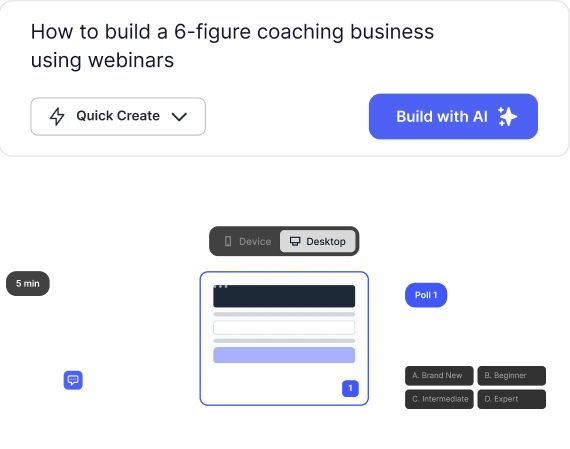
From idea to fully built funnel: In under 5 minutes.
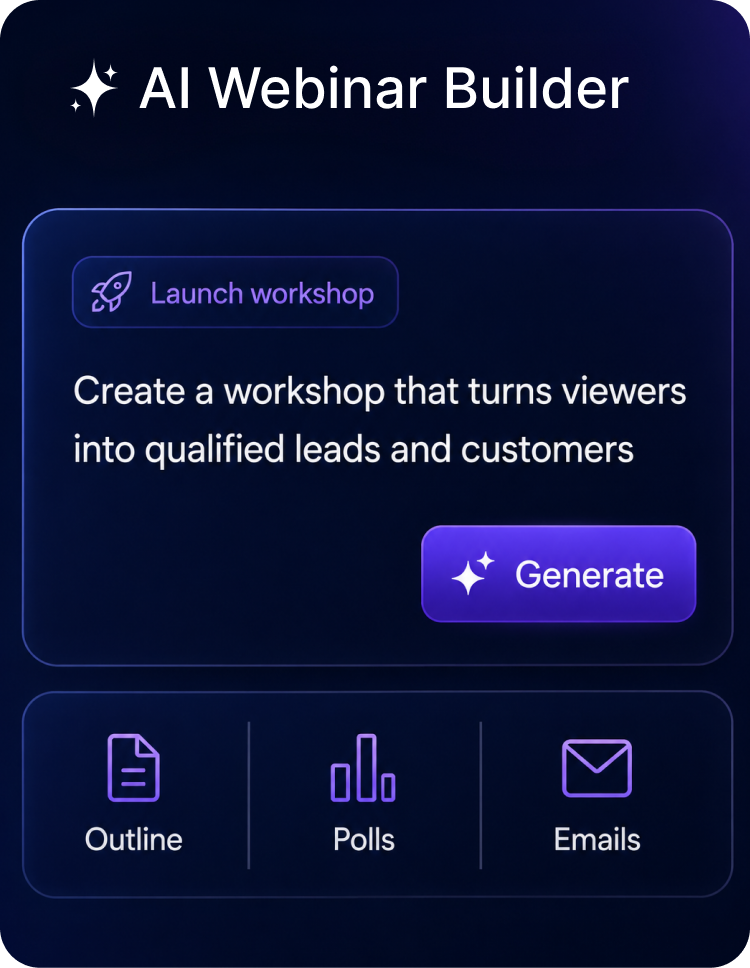
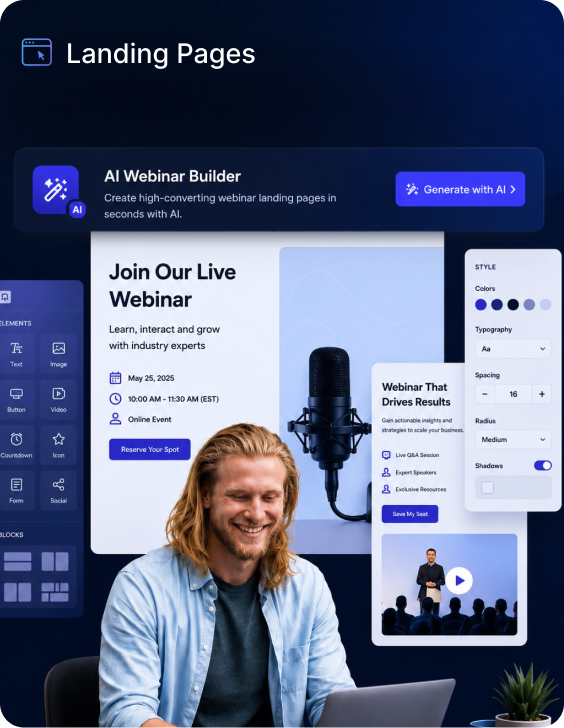
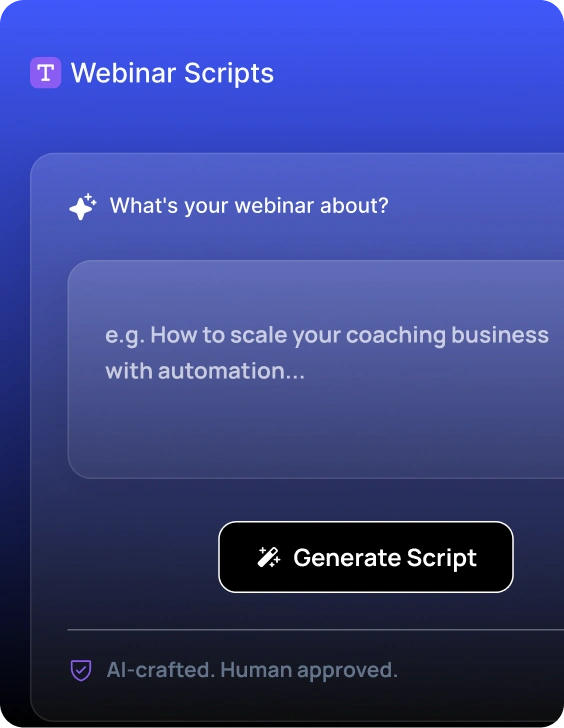
- Let AI generate your complete webinar script.
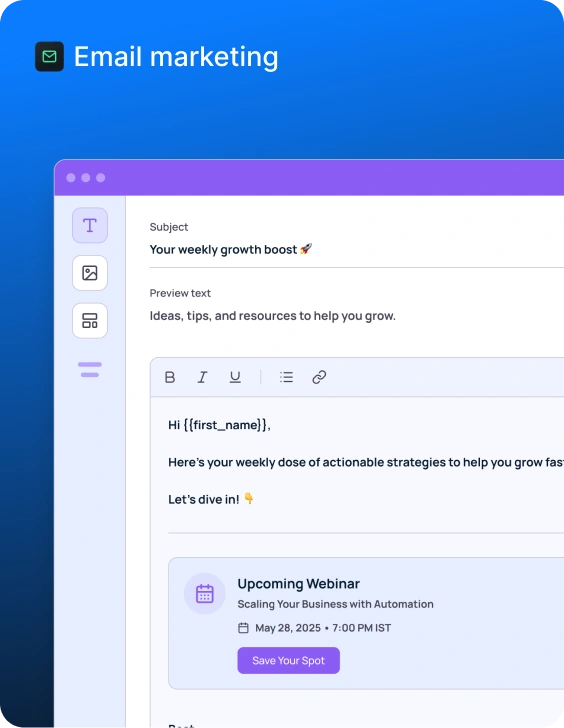
- Auto-create registration pages, thank-you pages, & emails.
- Suggests polls based on your offer and audience.
Broadcast everywhere.
Convert from one webinar room.
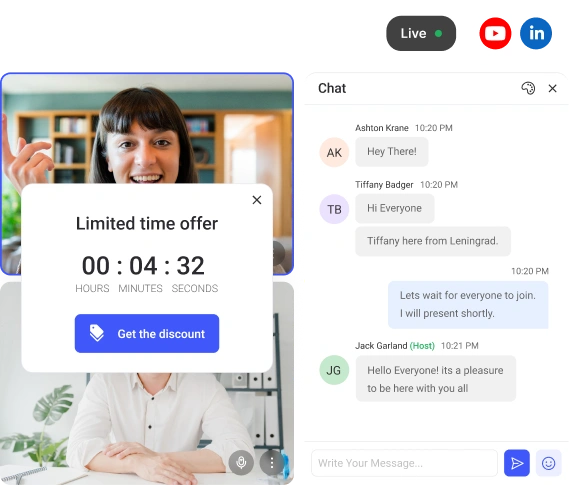
Most platforms host your webinar. EasyWebinar helps you close inside it.
- Timed CTAs and in-webinar offers.
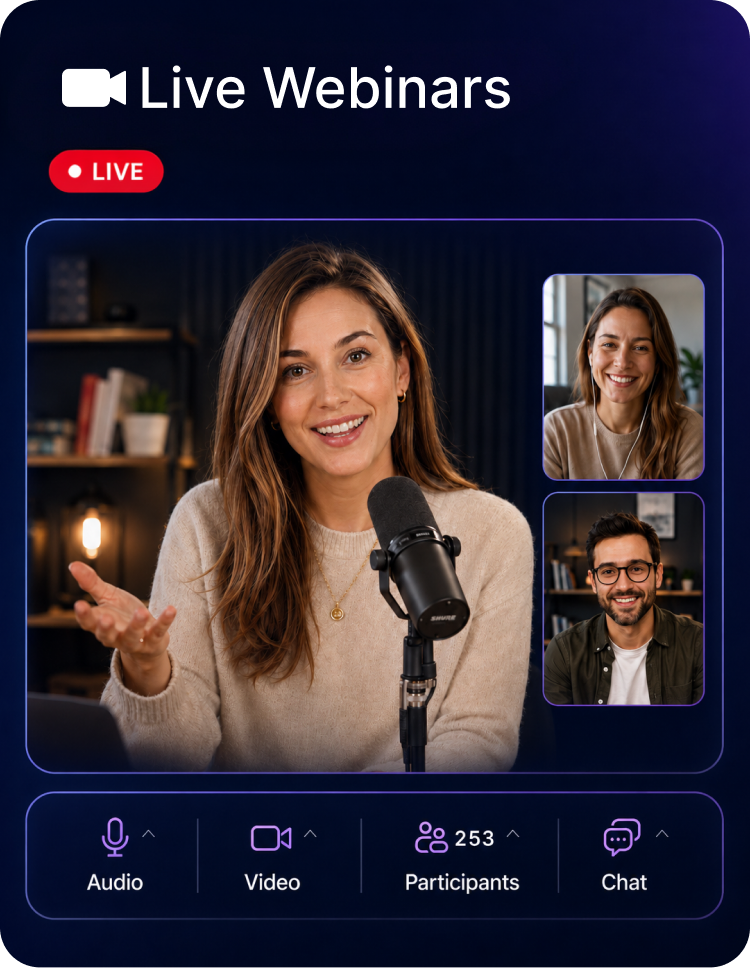
- Real-time polls, chat, and Q&A.
- Ultra-HD streaming for audiences up to 100,000 attendees.
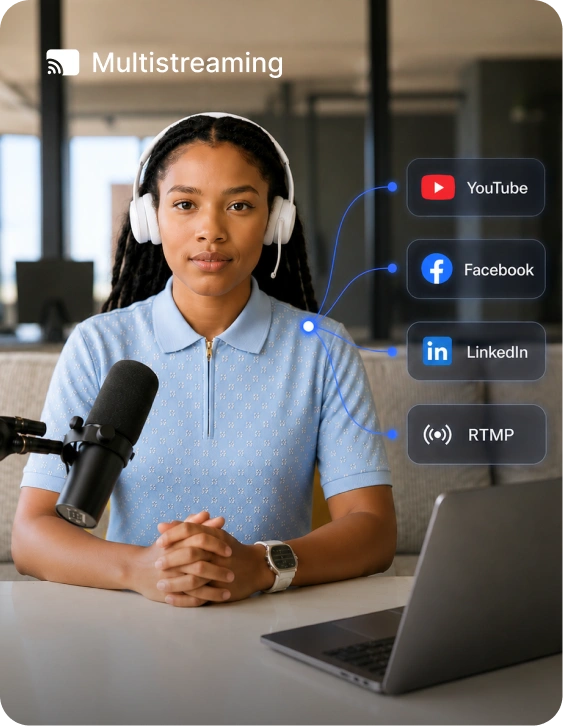
- Multistream via EasyCast to YouTube, Facebook, LinkedIn simultaneously with one click.
Host Once.
Sell forever.
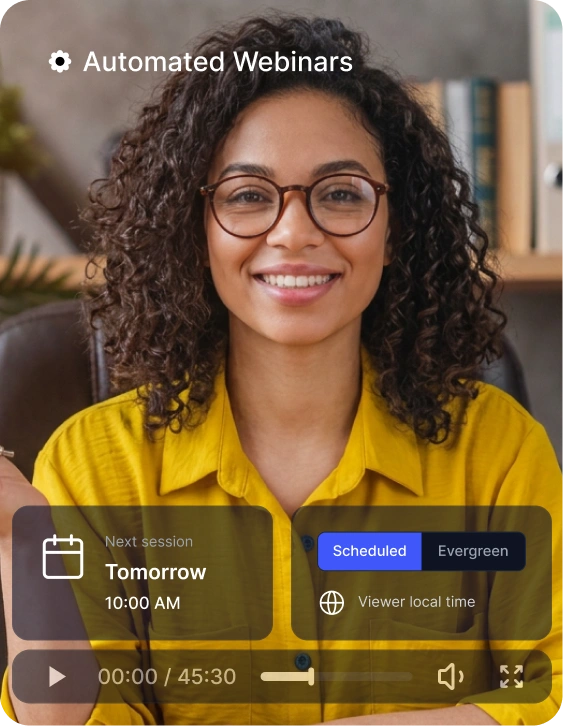
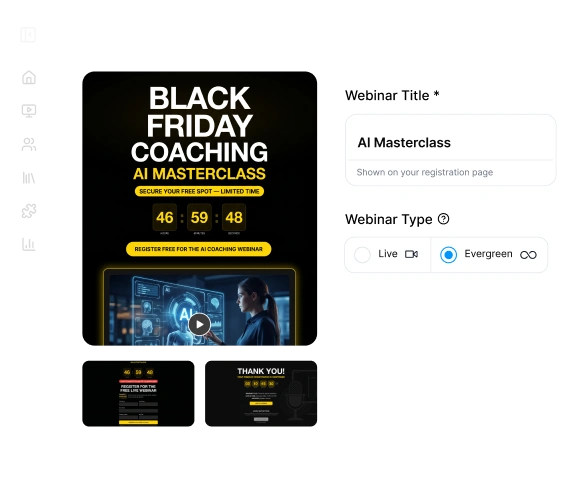
Your best webinar runs every day, in any time zone, without you.
- Turn any live session into an evergreen automated funnel.
- Runs in your attendees' local time zones, 24/7.
- Simulate a live experience with chat, polls, and offers intact.
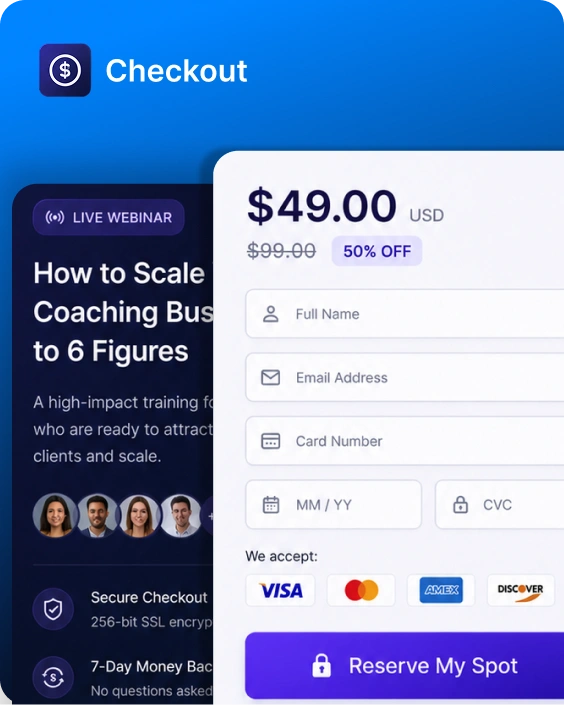
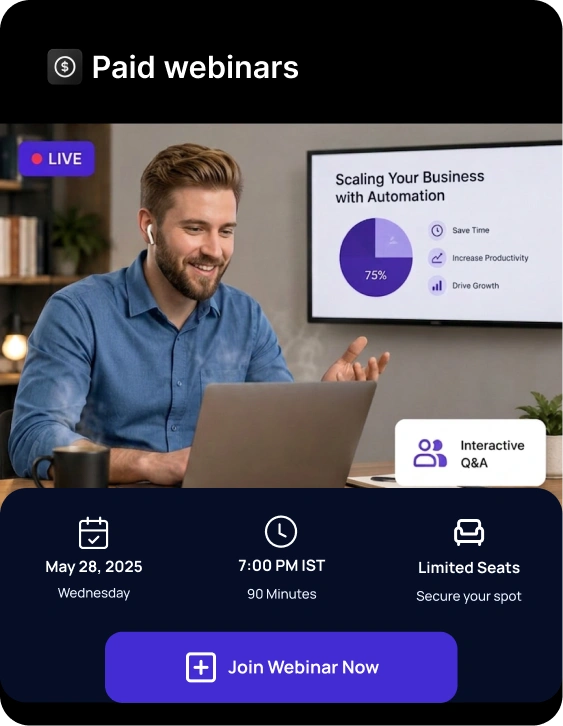
- Paid and ticketed events with gated access.
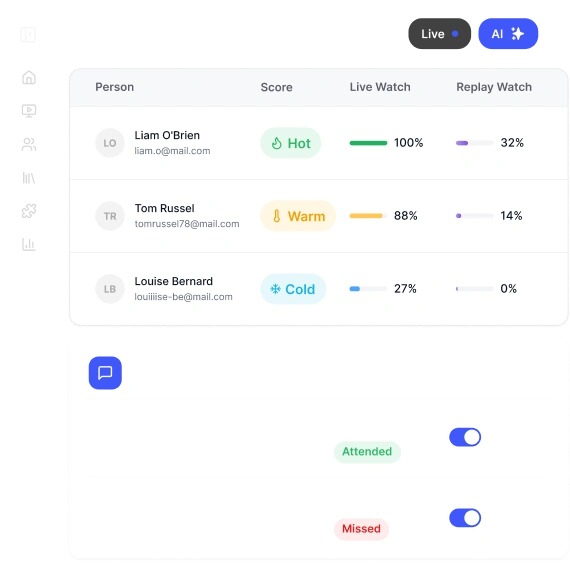
No more guessing
who's ready to buy
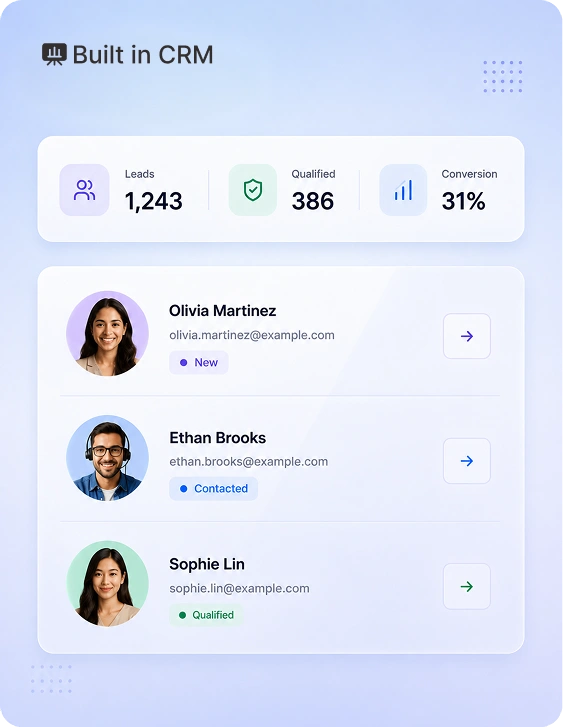
Every registrant auto-tagged and tracked from first click to final sale.
- Lead scoring based on watch time, CTA clicks, and offer views.
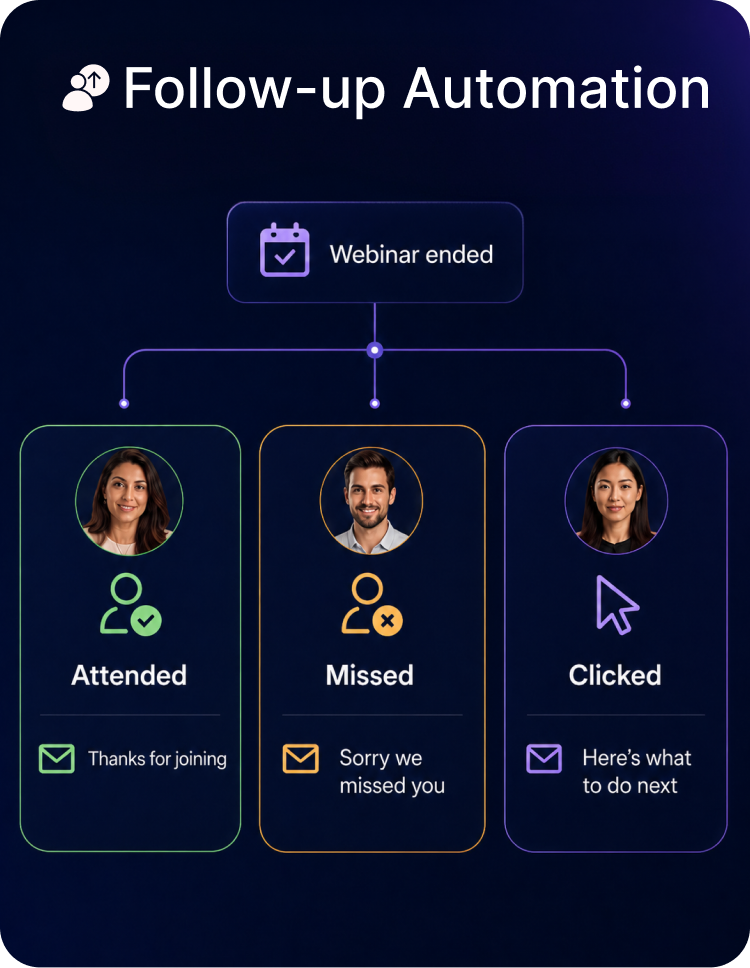
- Automated follow-up sequences timed to where each lead dropped off.
- Works with your existing CRM or replaces it entirely.
- Lead Finder for outbound prospecting.
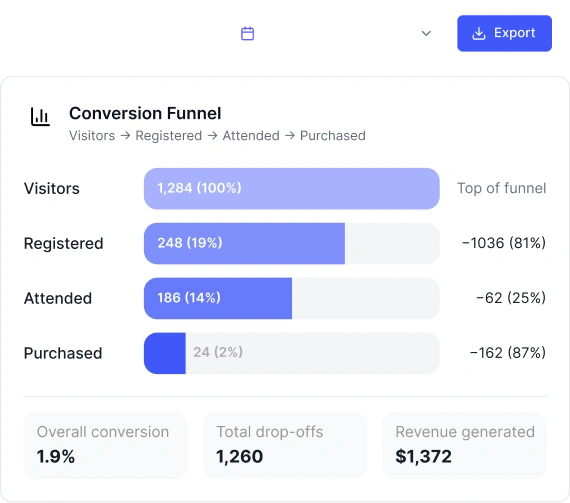
Know exactly where
you are losing sales
Stop running the same webinar and hoping for different results.
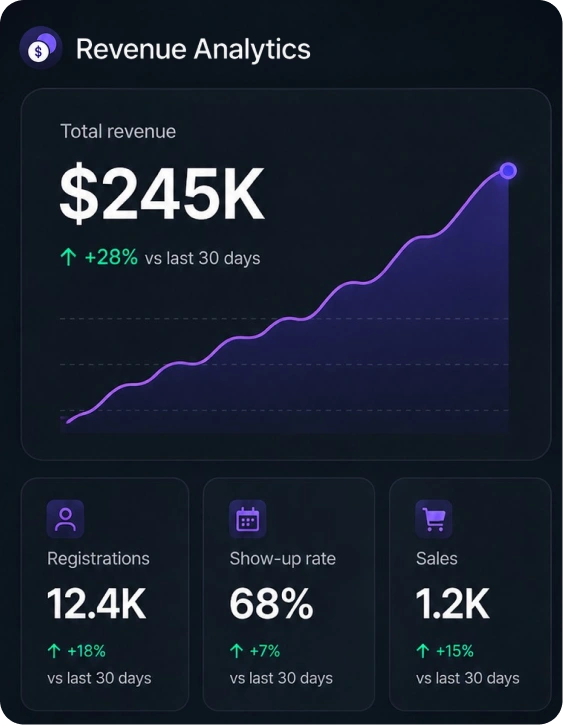
- Track drop-off points, engagement depth & offer click rates.
- See which registrants watched, which clicked, and which are sales-ready.
- Optimise your funnel with real data.
Connects to your stack
Connect your webinar funnel to your revenue stack
Send webinar registrations, attendance, clicks, purchases, replay activity, and engagement data into the tools your sales, marketing, and operations teams already use.
From first idea to 24/7 automated
revenue, on one platform
Build with AI
Script, pages, and emails, done in minutes with AI.
Go live
Present to your audience with real-time conversion tools.
Automate it
Turn your best session into an evergreen revenue funnel.
Scale & optimise
Use real data to improve every session, every time.
What happens when
your webinar runs itself?

Carla Beisinger
Founder & CEO
+183%
Increase in replay engagement
$5M generated from one evergreen webinar funnel as Carla scaled from small live events to a fully automated system.

Dr. Gregory M. Fryer
MD Medical Direct Care
+387%
Increase in show up rate
"EasyWebinar didn't just help our business grow, it gave us the freedom to fully focus on what we do best, treating patients & changing lives."
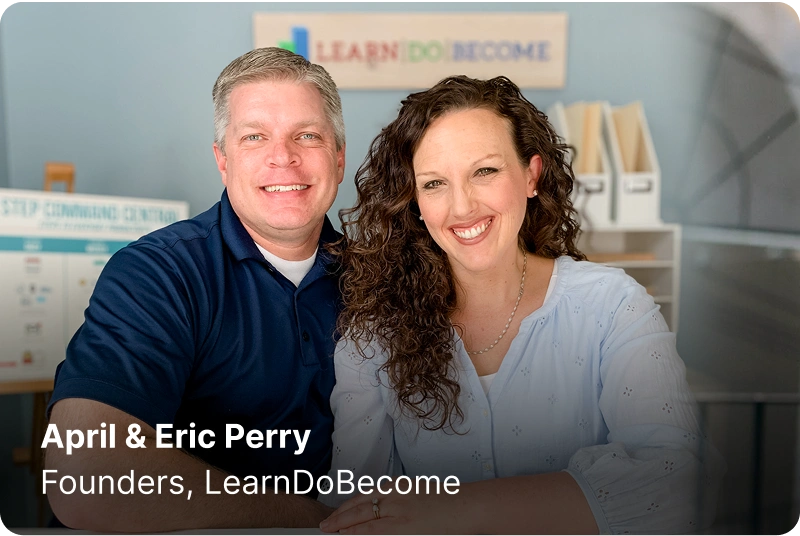
April & Eric Perry
Founders, LearnDoBecome
+185%
Increase in replay views over 5 years
April & Eric Perry achieved 10.5x Offer Click Conversions with Automated Webinars.
Enterprise security from day one.
SOC 2 Type II certified. GDPR compliant. SSO/SAML and SCIM provisioning. A custom DPA on Enterprise. Most procurement teams clear EasyWebinar in a week.
SOC 2 Type II
Continuous third-party audit
GDPR
EU data residency available
SSO / SAML / SCIM
Enterprise identity ready
99.9% uptime
Named SLA on Enterprise
Replace a $1,500/mo
stack with one platform.
The stitched stack
- · 6 logins · 6 dashboards · 6 invoices
- · 3 to 6 weeks to wire up
- · Manual reporting across disconnected tools
- · More points of failure when campaigns go live
EasyWebinar Growth
One platform to host, automate, sell, and follow up from webinars.
- ▸Live webinars with chat, Q&A, polls, and HD streaming
- ▸Automated, evergreen, replay, and just-in-time webinars
- ▸AI Webinar Builder + 500 credits
- ▸Registration pages, thank-you pages, reminders, and replay flows
- ▸Timed CTAs, in-webinar offers, polls, and engagement tracking
- ▸EasyCRM with lead scoring and behavior-based follow-up
- ▸Paid webinar workflows and payment integrations
- ▸Up to 500 live attendees + 2,500 evergreen registrants
- ▸Video storage, recordings, replays, and webinar archives
- ▸EasyCast multistreaming to YouTube, Facebook, LinkedIn, and RTMP
- ▸Webinar analytics, CTA clicks, replay views, purchases, and revenue tracking
- ▸CRM, email, payment, checkout, Zapier, and API workflows
Replaces

Don't just take our word for it
Really happy I went with EasyWebinar. As a webinar newbie, I expected a steep learning curve. But EasyWebinar was intuitive, simple, and had me live in no time.

"EasyWebinar is a game-changer for course creators. I automated my webinar funnel, synced it with my email provider, and started selling courses."
We've run 30 webinars this year alone, it's been a game changer.

Make your webinar your
best salesperson
One platform. Live webinars, automated funnels, built-in CRM, and AI that does the setup for you.
